
The EU Packaging and Packaging Waste Regulation (PPWR) applies from August 12, 2026. It is the most significant overhaul of European packaging rules since the 1994 Packaging Directive. If you are a brand owner, retailer, or importer sourcing products from China, this regulation directly affects how your goods can enter the European market.
Yet most buyers outside the EU remain unaware of what PPWR requires, or assume it only applies to European manufacturers. That assumption is wrong. Under PPWR, any packaging placed on the EU market, regardless of where it was produced, must comply. If your Chinese supplier ships products in packaging that fails to meet the new standards, your goods can be stopped at the border.
This guide explains what PPWR means for buyers who source from China and the specific requirements you need to watch. It also shows how working with a sourcing agent can close the compliance gap between you and your suppliers.
What Is PPWR? A Brief Overview for Buyers
PPWR, Regulation (EU) 2025/40, replaces the old Packaging and Packaging Waste Directive (94/62/EC), which had been in force since 1994. The shift from a Directive to a Regulation is significant: unlike a Directive, which each EU country interprets and implements differently, a Regulation applies uniformly across all 27 member states from day one.
The regulation covers all packaging placed on the EU market, regardless of material (plastic, paper, glass, metal, composite), origin (EU-made or imported), or sector (food, cosmetics, electronics, industrial goods). Its goals are threefold:
- Reduce packaging waste, targeting a 15% overall reduction by 2040.
- Recycle more, mandating recyclability grading (A through C) and minimum recycled content in plastic packaging.
- Eliminate harmful substances, capping heavy metals and banning PFAS in food-contact packaging.
Penalties are set by each EU country and can reach a significant share of annual company turnover, along with the possibility of products being banned from the EU market.
Why Sourcing from China Makes PPWR More Complex
PPWR applies equally to all packaging entering the EU, but the practical reality of enforcing compliance is very different when your supply chain crosses continents. Here is why sourcing from China creates specific challenges.
Supply Chain Role Definitions Under PPWR
PPWR assigns legal obligations based on your role in the supply chain. Understanding where you, and your Chinese supplier, sit in this framework is the first step to compliance:
- You (the EU buyer/brand owner) are the importer or the producer under PPWR. You bear primary legal responsibility: ensuring all packaging complies with PPWR, maintaining the Declaration of Conformity (DoC), and registering under Extended Producer Responsibility (EPR) in each EU country where you sell.
- Your Chinese supplier is the “supplier”. Their obligation is to provide you with accurate material data, test reports, and composition information for every packaging component they use.
- Packaging manufacturers in China are also “suppliers”. If your product supplier buys packaging from a third-party Chinese packaging factory, that factory is also in the compliance chain.aging fails compliance, the penalties fall on the EU importer or brand owner.
The critical point: EU enforcement targets you, not your Chinese supplier. If packaging fails compliance, the penalties fall on the EU importer or brand owner.
The Information Asymmetry Problem
Most EU buyers face a frustrating reality: they cannot easily obtain the packaging material data they need from Chinese suppliers. Common barriers include:
- Suppliers who do not know the chemical composition of their own packaging materials.
- Packaging sourced from multiple sub-suppliers, creating a chain of unknown origin.
- Language and technical barriers when requesting specific test reports (e.g., ICP-MS heavy metal analysis).
- Reluctance to share detailed material data due to competitive concerns.
- Lack of familiarity with EU regulatory terminology and requirements.
This information gap is the single biggest risk for EU buyers sourcing from China under PPWR.
Key PPWR Requirements That Affect Your Sourcing
PPWR introduces a phased set of requirements spanning from 2026 to 2040. The following are the most critical provisions that directly impact sourcing decisions today.
Heavy Metal Limits: 100 mg/kg Total
Effective immediately (August 12, 2026), the sum of lead (Pb), cadmium (Cd), mercury (Hg), and hexavalent chromium (Cr VI) in packaging or packaging components must not exceed 100 mg/kg. This applies to all packaging materials, inks, adhesives, coatings, and the base material itself.
For buyers sourcing from China, this means you need verified test reports from your supplier for every packaging component. Printing inks and colored pigments are particularly high-risk, as they frequently contain lead and cadmium above threshold levels.
PFAS Restrictions for Food Contact Packaging
PPWR sets extremely tight limits on per- and polyfluoroalkyl substances (PFAS) in food-contact packaging:
- 25 ppb (parts per billion) for any single PFAS substance.
- 250 ppb total for all PFAS combined.
PFAS are commonly used in grease-resistant food packaging such as burger wrappers, pizza boxes, and food containers sold into the EU. Many Chinese packaging manufacturers still use PFAS-based coatings because they are effective and inexpensive. Buyers importing food-contact packaging from China must ensure their suppliers have switched to PFAS-free alternatives and can provide migration test data to prove it.
Recyclability Grading: A/B/C Classification
Starting January 1, 2030, all packaging placed on the EU market must achieve at least a Grade C recyclability rating (minimum 70% recyclability). By January 1, 2038, only packaging rated Grade A or B will be permitted.
Recyclability is assessed based on whether the packaging can be efficiently collected, sorted, and recycled at scale in EU infrastructure. This affects several common Chinese packaging practices:
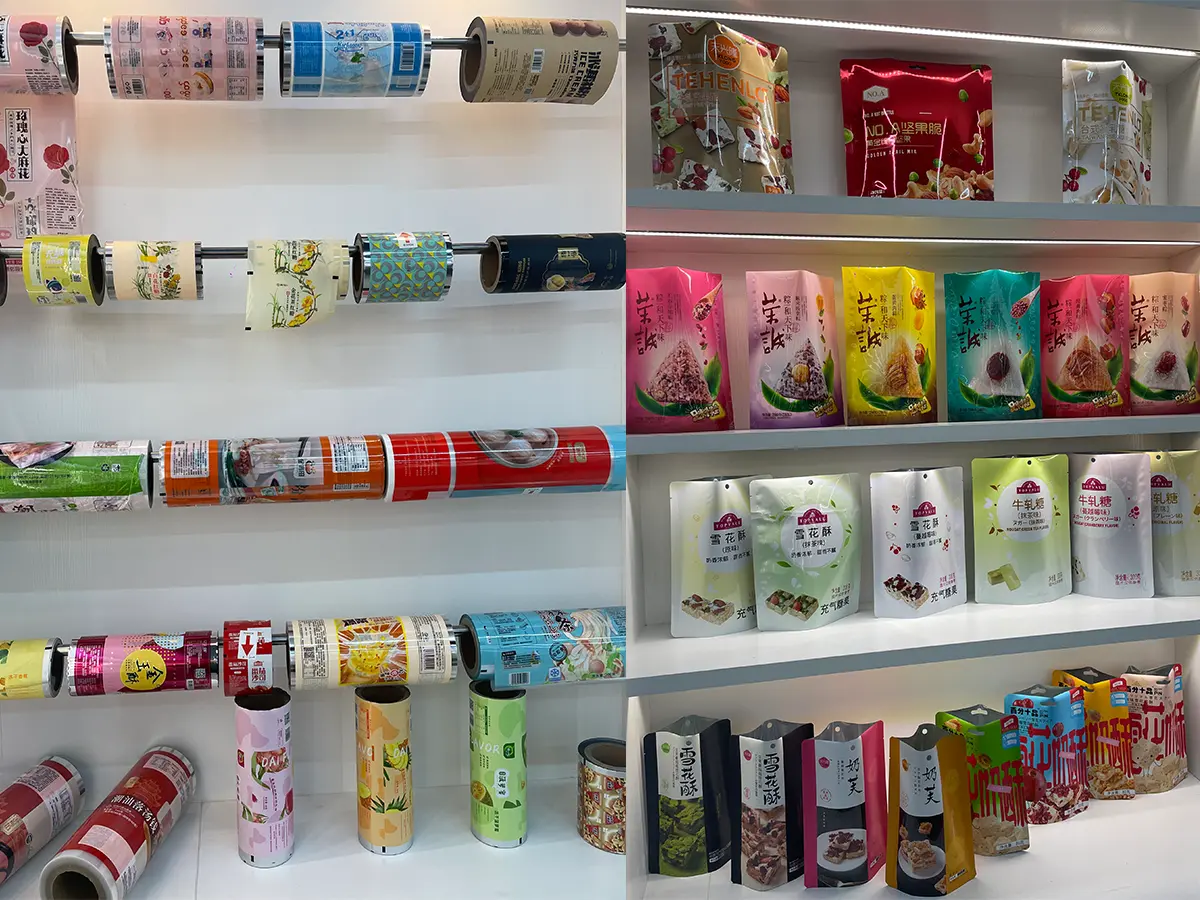
- Multi-material laminates (e.g., plastic-aluminum pouches), typically non-recyclable under EU criteria.
- PVC packaging, increasingly restricted due to sorting difficulties.
- Dark-colored plastics, often undetectable by near-infrared sorting systems.
- Complex composite packaging, materials that cannot be easily separated.
If your product packaging uses any of these formats, you should begin working with your supplier on a redesign now, well ahead of the 2030 deadline.
EPR Registration in Each EU Country
Under PPWR, any producer must register for Extended Producer Responsibility (EPR) in each EU country. The producer is the entity that first places packaging on that country’s market. This means separate registration in each of the 27 EU member states where your products are sold.
For non-EU companies (including Chinese manufacturers selling directly to EU consumers), PPWR requires appointing an Authorised Representative in each target member state to handle EPR obligations on their behalf.
Documentation: Declaration of Conformity and Technical Files
Every packaging product placed on the EU market must be accompanied by a Declaration of Conformity (DoC) and supporting technical documentation. The DoC must reference:
- The specific harmonised standards applied.
- Test results for heavy metals, PFAS (where applicable), and recyclability.
- Material composition and weight data.
- Supplier identification and traceability information.
These documents must be retained for 5 to 10 years (depending on the obligation) and made available to market surveillance authorities on request. This is your responsibility as the importer. Your Chinese supplier is only required to provide the underlying data.
How a China Sourcing Agent Helps You Stay PPWR Compliant

The compliance gap between what PPWR requires and what most Chinese suppliers can currently provide is significant, but bridgeable. A professional sourcing agent with on-the-ground presence in China serves as the critical link between EU regulatory requirements and supplier capabilities.
Supplier Packaging Compliance Audits
A sourcing agent conducts on-site factory audits specifically focused on packaging compliance. This goes beyond standard quality inspections to verify:
- Whether the supplier has documented knowledge of all packaging materials used (including sub-supplier sources).
- Availability and validity of test reports from accredited laboratories (e.g., SGS, TÜV, Intertek).
- Storage and handling conditions for packaging materials (preventing contamination).
- Whether the supplier has a packaging compliance management system in place.
Collecting Test Reports and Material Data
One of the most time-consuming tasks for EU importers is gathering the full set of documentation required under PPWR. A sourcing agent handles this directly, as covered in our guide on how to request Chinese factory compliance documents:
- Requesting and verifying heavy metal analysis reports (ICP-MS or XRF).
- Obtaining PFAS migration test data for food-contact packaging.
- Collecting material safety data sheets (MSDS) for all packaging components.
- Compiling a structured technical file that supports your Declaration of Conformity.
Coordinating Packaging Redesign
When existing packaging fails recyclability requirements or contains restricted substances, a sourcing agent coordinates the redesign process:
- Identifying alternative materials (mono-material structures, PFAS-free coatings, recyclable inks).
- Sourcing and qualifying new packaging suppliers if needed.
- Managing sampling and testing of new packaging formats.
- Ensuring cost implications are understood before committing to changes.
Connecting with EPR Service Providers
A sourcing agent does not directly handle EPR registration, because that is a legal process inside the EU. But they can connect you with EPR service providers and help prepare the data packages those providers need. That data includes packaging weight and material composition, which must come from your supply chain.
Get Your China Sourcing and Packaging Compliance Checked by Our Team

PPWR Compliance Checklist for Importers Sourcing from China
Use this checklist to assess your current readiness. Each item should be verified for every product line sourced from China that enters the EU market.
Immediate Requirements (Effective August 2026)
- ☐ Heavy metal test reports obtained for all packaging components (Pb + Cd + Hg + Cr VI ≤ 100 mg/kg).
- ☐ PFAS test data obtained for all food-contact packaging (single PFAS ≤ 25 ppb, total ≤ 250 ppb).
- ☐ Declaration of Conformity drafted and signed for each product line.
- ☐ Technical documentation compiled and archived (retention: 5-10 years).
- ☐ EPR registration completed in all target EU member states.
- ☐ Authorised Representative appointed if you are a non-EU company.
Upcoming Requirements (2028-2030)
- ☐ Packaging labelling plan prepared for unified classification symbols (mandatory from August 2028).
- ☐ Recyclability assessment completed for all packaging formats (Grade C minimum by January 2030).
- ☐ Void ratio analysis done for e-commerce packaging (≤ 50% by January 2030).
- ☐ Recycled content targets mapped for plastic packaging.
- ☐ Packaging minimisation review conducted with suppliers.
Long-Term Planning (2035-2040)
- ☐ Packaging reduction roadmap aligned with 10% (2035) and 15% (2040) targets.
- ☐ Supplier transition plan for Grade A/B recyclability (mandatory by 2038).
- ☐ Budget allocated for ongoing packaging redesign and testing.
Frequently Asked Questions
Does PPWR apply to packaging made in China?
Yes. PPWR applies to all packaging placed on the EU market, regardless of where the packaging was manufactured. If you import goods from China into the EU, the packaging must comply with all applicable PPWR requirements.
Who is legally responsible for PPWR compliance, the Chinese supplier or the EU buyer?
The EU buyer (importer or brand owner) bears primary legal responsibility. Your Chinese supplier’s obligation is limited to providing accurate material data and test reports. If compliance fails, penalties are enforced against the EU importer.
What are the fines for PPWR non-compliance?
Penalties range from 2% to 6% of global annual turnover, depending on the severity and nature of the infringement. Authorities can also ban non-compliant products from the EU market entirely.
Do I need to register for EPR in every EU country?
Yes. EPR registration is required in each EU member state where you first place packaging on the market. There is no single EU-wide registration; each country has its own system and fee structure.
What is a Declaration of Conformity (DoC) under PPWR?
A DoC is a formal document in which you, as the importer or producer, declare that your packaging meets all applicable PPWR requirements. It must be supported by test reports, material data, and technical documentation, and retained for 5 to 10 years.
How can I verify my Chinese supplier’s packaging test reports?
Request reports from ISO 17025-accredited laboratories (such as SGS, TÜV, Intertek, or Bureau Veritas). Verify the report references the correct test methods (e.g., EN 13432 for compostability, ICP-MS for heavy metals) and that the test scope covers all packaging components.
When do the recyclability requirements take effect?
Grade C recyclability (minimum 70% recyclability) is mandatory from January 1, 2030. By January 1, 2038, only Grade A or B packaging will be permitted. You should begin assessing your packaging now and plan redesigns well ahead of these deadlines.
What are PFAS and why are they restricted?
PFAS (per- and polyfluoroalkyl substances) are a family of synthetic chemicals used for grease and water resistance in food packaging. They are called “forever chemicals” because they do not break down in the environment and accumulate in the human body. PPWR restricts them to 25 ppb for any single PFAS in food-contact packaging.
Need help ensuring your packaging supply chain in China is PPWR compliant? Contact Asian Sourcing Group. Our team can audit your suppliers, collect the documentation you need, and coordinate packaging redesign to meet EU standards.



-300x198.png)


