You asked your Chinese supplier to cut delivery from 45 days to 30. Their reply: “No problem, we will try our best.”
You took it as a yes. Day 30 arrived, but production hadn’t even started.
The issue wasn’t English proficiency. It was the gap between what you heard and what your supplier meant.
In Chinese business culture, “no problem” can signal different levels of commitment. Based on our 13 years of supplier management experience, we’ve seen how vague replies can lead to costly misunderstandings.
Here’s how to read these responses more carefully—even without speaking Mandarin.
Why Language Fluency Doesn’t Solve the Problem

Many buyers assume that finding a supplier with good English solves the communication challenge. It doesn’t. Here’s why:
Chinese business culture is built on indirect communication as a sign of respect and professionalism. A factory owner who tells a client “we cannot do this” is not being honest, in their cultural framework, they’re being rude. They’re implying they lack capability, which damages their professional reputation (“face,” or 面子).
A supplier may say, “We will try our best” when the outcome is still uncertain. Don’t treat it as a firm commitment or a hidden refusal. Ask what needs to happen first. Confirm when the supplier can assess feasibility. Then agree on a realistic delivery date.
Understanding how product sourcing in China actually works (read our full breakdown here) helps, but the communication layer sits on top of the operational one.
A misunderstood timeline can cost you a retail season. An unclear commitment can also lead to missed shipments, costly rework, or defective goods.
The Three Meanings of “No Problem”

Let’s decode the single most common; and most dangerous, phrase in Chinese supplier communication.
Meaning #1: “Genuinely No Problem”; They Can and Will Do It
How to recognize it:
- The supplier proactively provides a specific execution plan (“We’ll shift the second production line to accommodate your order”).
- The response includes concrete timelines and named responsible parties.
- They voluntarily mention risks or backup options (“If the raw material shipment is delayed, we have an alternative source ready”).
- Response speed is normal or faster than usual.
Confidence level: ★★★★★; This is a genuine commitment. Proceed with confidence.
Meaning #2: “It’s Difficult, But I Don’t Want to Disappoint You”
How to recognize it:
- The response includes hedging language: “we will try our best,” “it might be possible,” “let me check with the production team”.
- No specific execution steps or firm timelines are offered.
- Response time is slower than usual (they’re deliberating how to frame the answer).
- They suggest alternatives without directly addressing your original request.
What it actually means: This is challenging, possibly beyond their current capacity, but the supplier doesn’t want to lose face or lose your business by saying no directly.
What you should do: Give them a safe exit. Use this language: “I understand this might be challenging. If it’s not feasible, please tell me honestly, I’d rather know now so we can plan alternatives together. No hard feelings.”
Meaning #3: “Absolutely Not Possible, But I Won’t Say No to Your Face”
How to recognize it:
- The response changes the subject (you asked about delivery, they wrote three paragraphs about quality).
- They use generalizing language: “generally speaking,” “in most cases,” “normally we can…”.
- They don’t respond to that specific message at all, while continuing to reply to other topics.
- They suddenly suggest a call or meeting to “discuss in detail” (because written refusal feels too direct).
What it actually means: This cannot be done. But saying “no” directly would damage the relationship and cause embarrassment.
What you should do: Stop asking yes/no questions. Switch to multiple-choice framing: “Based on your current production schedule and material availability, what delivery date can you commit to? If 30 days is not feasible, what is the earliest realistic date and why?“ This removes the pressure of direct rejection and gives them a face-saving way to tell you the truth.
Six More Phrases That Don’t Mean What You Think They Mean

Beyond “no problem,” here are six expressions that consistently trip up Western buyers:
1. “We Will Try Our Best” (我们尽量)
| What you hear | What they mean | How to verify |
|---|---|---|
| “They’ll go all out to make it happen” | “This is difficult and we’re not sure we can deliver” | Ask: “By when can you confirm whether this is achievable, yes or no?” |
In Chinese business context, “try our best” is a expectation-lowering signal, not a commitment. If a supplier wanted to commit, they’d say “we will do it” (我们会做到), no hedging.
2. “The Price Can Be Discussed” (价格可以再商量)
| What you hear | What they mean | How to verify |
|---|---|---|
| “There’s room to negotiate down significantly” | “Our initial quote has a 10-20% buffer, but don’t push to our cost line” | Propose a reasonable 5-8% reduction and observe their reaction |
Chinese suppliers build negotiation room into initial quotes. This isn’t deception; it’s cultural expectation. The “real” price is typically 85-95% of the opening offer. Our supplier quote comparison guide covers how to read between the numbers.
3. “We Are Very Experienced in This” (这个我们很擅长)
| What you hear | What they mean | How to verify |
|---|---|---|
| “We’ve produced this many times at scale with proven quality” | “We know what this product is and could probably make it” | Request: “Can you share shipment records for this product category from the last 6 months?” |
“Experienced” can mean anything from “we’ve made 100,000 units” to “we’ve seen this product at a trade show.” The only verification is evidence: shipment records, client references, or production photos of running orders.
4. “I’ll Get Back to You Soon” (我尽快回复你)
| What you hear | What they mean | How to verify |
|---|---|---|
| “1-2 business days” | “I need to ask someone else, but admitting I don’t know would look unprofessional” | Set a specific deadline: “Please confirm by Thursday end of day, China time.” |
In Chinese business culture, admitting “I don’t know” costs face. “I’ll get back to you soon” often means “I need to find the answer but don’t want you to think I’m incompetent.” The fix is always to set a hard deadline; this gives them permission to come back with “I checked, and the answer is…”
5. “The Quality Is Guaranteed” (质量有保障)
| What you hear | What they mean | How to verify |
|---|---|---|
| “We have ISO certification and a full QC department” | “I believe our quality is decent” | Ask specifically: “At what production stages do you inspect? Can I see your QC report template?” |
“Quality guaranteed” is a subjective claim, not an objective one. Real quality assurance means traceable inspection records, standardized acceptance criteria, and documented corrective actions. Our factory audit guide explains what to actually look for.
6. Silence on a Specific Question
| What you think | What it means | How to handle it |
|---|---|---|
| “They didn’t see it” or “They’re too busy” | “This question makes them uncomfortable; they’re avoiding it” | Rephrase the question in a softer, less confrontational way and see if they respond |
If a supplier repeatedly skips questions about penalty clauses, raw material sourcing, or subcontracting while answering other messages, treat the omission as an unresolved risk. Follow up in writing, set a response deadline, and avoid finalizing the order until the relevant terms are clear.
The “Face” Factor: Why Chinese Suppliers Avoid Direct Rejection

Stop Guessing What Your Supplier Really Means
To understand all of the above, you need to understand one concept: 面子 (miànzi), or “face.”
In some business relationships, direct disagreement may feel uncomfortable, particularly when preserving rapport matters. A supplier may soften a refusal or suggest an alternative, but the reason could be practical as well as interpersonal. Buyers should clarify the underlying constraint rather than assume the response is driven by face.
For example, a supplier may respond to an unrealistic delivery request by suggesting a later date or an alternative production plan instead of refusing outright. You still needs to confirm whether the original request is feasible and document the agreed terms.
For buyers, the practical implication is clear: you need to actively create an environment where saying “no” is safe. Make it clear that honesty is more valued than agreeableness.
The “Permission to Say No” Framework
Use these three expressions in your supplier communications to get honest answers:
- “I’d rather hear an honest ‘no’ now than deal with surprises later. Please be direct, I won’t be upset, and it won’t affect our relationship.”.
- “If this isn’t feasible, I’d appreciate you telling me what IS feasible. That actually helps me plan better than a ‘yes’ that might not happen.”.
- “We specifically value suppliers who flag challenges early. It shows professionalism, not weakness.”.
The third one is particularly powerful because it reframes honesty as a competitive advantage, now the supplier has a positive reason to be direct rather than just permission.
Five Verification Questions That Cut Through Cultural Noise

When you sense a supplier’s answer is too vague or too optimistic, use these questions to get real information without putting them in a face-losing position:
| # | Verification Question | Instead Of | Why It Works |
|---|---|---|---|
| 1 | “What’s the earliest date you can confirm, not promise, but confirm with 90% certainty?” | “Can you deliver by [date]?” | Shifts from binary yes/no to a realistic timeline they can commit to |
| 2 | “What would need to happen for this timeline to NOT work?” | “Will this work?” | Asks them to name risks, which is face-safe because it’s hypothetical |
| 3 | “Can you share the last 3 orders similar to this that you completed?” | “Have you done this before?” | Demands evidence rather than allowing self-assessment |
| 4 | “If I need to change specs midway, what’s your process and cost for that?” | “Can you handle changes?” | Specific process questions can’t be answered with vague reassurances |
| 5 | “Who specifically will manage my order day-to-day? Can I have their WeChat?” | “Will someone be assigned to my account?” | Asking for a specific name reveals actual resource commitment |
The common thread: these questions are designed so that vague answers become harder to give than specific ones. They work in any language, but they’re especially effective in Chinese business culture because they don’t force the supplier into a corner.
Communication Channel Matters More Than You Think

The medium you choose changes what you’ll actually hear. Chinese suppliers communicate differently across channels; and understanding these differences gives you a significant edge. This is especially important if you’re managing your supply chain remotely from outside China (here’s our guide on remote supply chain management).
Email: For Documentation and Formal Commitments
Suppliers are more careful in email because they know it creates a permanent record. When a supplier gives you a clear commitment in writing, it carries more weight than the same words spoken on WeChat. Use email for:
- Formal quotations and price confirmations.
- Production timelines and delivery dates.
- Specification approvals and change orders.
- Contract terms and penalty clauses.
WeChat: For Relationship Building and Honest Signals
Suppliers are more relaxed on WeChat. The most honest information often surfaces in casual WeChat conversations, a quick voice message saying “actually, next month is going to be tight for us” tells you more than any formal email. Use WeChat for:
- Daily check-ins and relationship maintenance.
- Quick clarifications on minor issues.
- Reading the supplier’s emotional state and stress level.
- Casual information that wouldn’t appear in formal correspondence.
Pro tip: Ask your supplier to send voice messages instead of text on WeChat. Voice is harder to “edit” and reveals tone, hesitation, and confidence levels that text strips away.
Video Call: For Critical Decisions and Ambiguity Resolution
Video calls let you observe body language, facial expressions, and pauses. When a supplier hesitates before answering “yes,” that half-second pause is more informative than the word itself. Use video calls for:
- Negotiating major terms or resolving disputes.
- Discussing custom specifications where visual confirmation matters.
- Building trust early in a new supplier relationship.
- Any situation where text-based communication has become ambiguous.
The Channel-Switching Signal
Pay attention when a supplier suddenly changes the communication channel:
- WeChat → Email: “Let me reply formally by email”; they want to make this official. Usually positive.
- Email → WeChat: “Let’s chat about this on WeChat”; they don’t want a formal record of what they’re about to say. Could be positive (informal honesty) or concerning (avoiding accountability).
- Text → Video/Voice: “Let’s jump on a call”, the topic is too complex or sensitive for text. They want to read your reaction or explain nuance.
Building a “Translation Layer” Into Your Sourcing Process
The ultimate solution to cross-cultural communication isn’t for buyers to learn Chinese or for suppliers to adopt Western directness. It’s to embed a professional translation layer into your sourcing process, someone who understands both the buyer’s commercial logic (deadlines, KPIs, compliance requirements, brand standards) and the factory’s production language (process limitations, scheduling logic, cost structures, seasonal constraints).
There are three ways to implement this:
Option 1: Hire a Bilingual Procurement Manager
Best for: Large companies with $5M+ annual China spend.
Cost: $60K-$120K/year + benefits.
Limitation: One person can only cover so many suppliers and categories.
Option 2: Build Standardized Bilingual Documentation
Best for: Companies with repeatable product specifications.
Approach: Create bilingual spec sheets, QC checklists, and approval workflows that eliminate ambiguity at the document level.
Limitation: Documents handle known scenarios; they can’t interpret real-time communication nuances.
Option 3: Use a Professional Sourcing Partner
Best for: Companies that want coverage across multiple categories and regions.
How it works: A sourcing partner like ASG acts as the cultural and operational translator, not just converting words, but translating commercial intent. When your supplier says “we’ll try our best,” your ASG project manager tells you: “Their capacity is booked until next month, and your order would need to be prioritized; that comes with a surcharge. Let me negotiate the terms.”
This is the difference between a language translator and a sourcing translator. One converts words. The other converts meaning, context, and risk. Our supplier management process is built around exactly this principle.
A Quick Self-Test: Can You Decode These Messages?
Before we wrap up, test yourself with these three real-world scenarios:
Scenario 1: You ask your supplier to add a new color option. They reply: “Generally, we can produce different colors. Let me check with the material supplier about availability.”
Decode: Meaning #2. They likely can do it, but the material supplier may not have your specific color in stock, which would add lead time. They’re not promising anything until they confirm with their upstream.
Scenario 2: You request a 15% price reduction. They reply: “Our quality is very high compared to other factories. The price reflects our quality standard.”
Decode: They’re not saying “no.” They’re signaling that they won’t reduce price without you accepting lower specifications. The real question to ask: “What specification changes would bring the price down by 10%?”
Scenario 3: You ask about a production delay. They reply enthusiastically about their quality control process and send photos of their QC lab.
Decode: Meaning #3. They’re avoiding the delivery question entirely. The delay is real, and they’re hoping the quality photos distract you from pressing on timelines. Follow up directly: “Thank you for the QC info, very helpful. To clarify: when exactly will my order ship?”
Frequently Asked Questions
Is Chinese business communication always this indirect?
Not always. Younger generations entering management roles and factories with dedicated international trade teams tend to communicate more directly. However, the indirect style remains dominant, especially when communicating with senior factory management or in negotiation contexts. Even suppliers with perfect English will default to cultural patterns when the stakes are high.
Should I learn Mandarin to communicate better with suppliers?
Basic Mandarin helps with relationship building and shows respect, but it won’t solve the decoding problem. Understanding cultural patterns (like those covered in this article) plus using structured verification questions is more effective than language fluency alone. Many fluent Mandarin-speaking Western buyers still get caught by the “face” dynamics.
Do all Chinese suppliers communicate this way?
No. Large export-oriented factories (annual exports exceeding $10M) typically have professional foreign trade teams trained in Western communication styles. Small and medium factories, family-run workshops, and newer suppliers are more likely to use indirect communication. The indirectness also varies by region, suppliers in Shenzhen and Shanghai tend to be more direct than those in smaller manufacturing cities.
How do I know if my sourcing agent is translating accurately?
A good sourcing agent doesn’t just translate words; they explain cultural subtext and production context. If your agent says “the supplier confirmed no problem” without providing the supplier’s specific execution plan, timeline, and risk factors, then the translation layer isn’t functioning properly. Demand context, not just translation.
What’s the single biggest communication mistake Western buyers make?
Assuming “yes” means “yes.” In Chinese business culture, “yes” can mean “I heard you,” “I understand your request,” or “I don’t want to embarrass you by saying no”; and only rarely does it mean “I commit to delivering this.” Always verify commitments with specific, evidence-based follow-up questions.
Ready to Stop Guessing?
If reading this article made you think of specific conversations with your Chinese suppliers where you weren’t sure what they really meant, you’re not alone. This is one of the most common frustrations in cross-border sourcing, and it costs buyers real money every day.
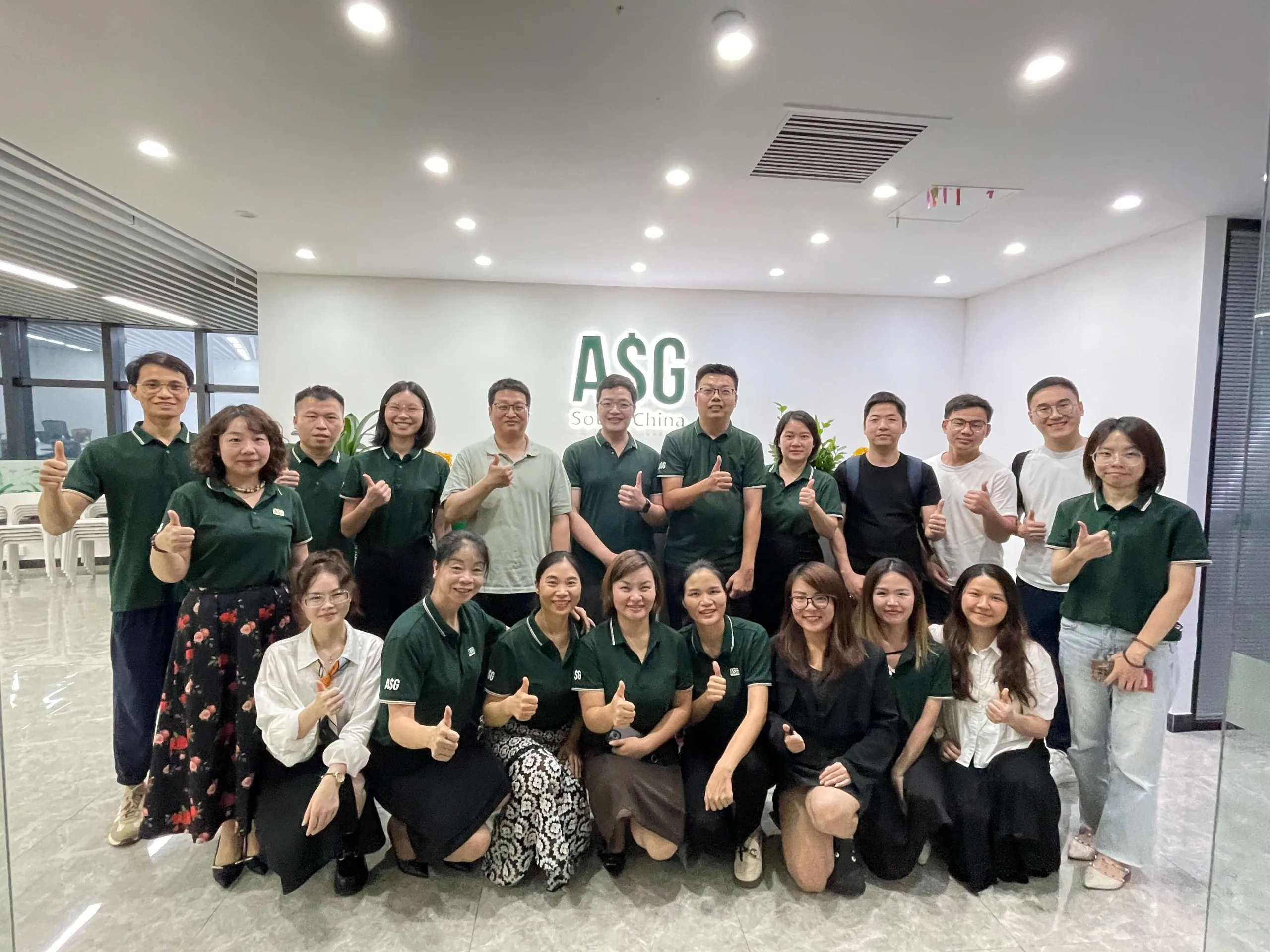
At ASG, our 500+ bilingual sourcing specialists handle this translation layer every day, not just words, but meaning, context, and risk assessment. We attend every Canton Fair, we visit factories in person, and we build relationships that give our clients the honest, direct communication they need to make good decisions.
Get in touch with our team → Let us be the bridge between your business requirements and your Chinese supplier’s production reality. No more lost-in-translation moments.