
Sourcing from China without verified compliance is a high-stakes gamble. For business teams, missing documentation triggers customs seizures and testing costs exceeding $4,500. This guide provides a strategic roadmap for securing authentic certificates, from vetting 18-digit Social Credit Codes to validating 6-digit factory codes on official portals. Learn to phase requests across the production cycle, align audits with the critical April 30 deadline, and handle supplier refusals to ensure a transparent, audit-ready supply chain that meets all GB standards.
What Compliance Documents Are Commonly Needed

When importing from China, documentation falls into two critical categories: mandatory regulatory filings and technical quality records.
Mandatory Regulatory Certifications
- CCC (China Compulsory Certification): Required for 103 product types (electronics, automotive, etc.). Must include lab test reports and factory inspection records.
- DoC (Declaration of Compliance): Essential for Food Contact Materials (FCM) under GB 4806.1-2016 standards.
- GMP (Good Manufacturing Practice): Mandatory for pharmaceuticals, requiring IQ/OQ/PQ validation and master batch records.
Technical & Quality Assurance Documentation
- GB Standard Test Reports: Verification that products meet specific Chinese National Standards.
- Material Declarations: Detailed composition breakdowns and chemical integrity test results.
- Voluntary Marks (CQC/CCAP): Evidence of superior quality standards beyond basic legal requirements.
- Audit Trails: Password-restricted electronic logs and modification records ensuring data immutability.
Pro Tip: Always verify the 18-digit Unified Social Credit Code to ensure the document issuer is a legally registered manufacturer.
How to Ask for Official Certificates Properly
To ensure document authenticity, buyers must move beyond reviewing PDFs and implement a rigorous verification protocol.
Step 1: Define the Regulatory Scope
Start by identifying if your product falls under the 16 mandatory CCC categories (e.g., electronics, toys, automotive). All compliance requests must specify GB (Guobiao) Standards, requiring testing by CNAS-accredited labs located within China. For non-regulated goods, request voluntary CQC certification to establish a quality benchmark.
Step 2: Technical Validation Protocol
Every valid certificate is tied to a unique 6-digit Factory Code. You must cross-reference this code with physical product markings and validate status via the official CNCA or CQC portals.
| Certification Type | Technical Requirement | Validity & Audit Cycle |
|---|---|---|
| CCC (Compulsory) | 16 Mandatory Families / GB Standards | 5 Years + Annual CoP/Audit |
| CQC (Voluntary) | Market Credibility / Technical Safety | 5 Years + Annual Surveillance |
| Product Marking | CCC Logo + 6-digit Factory Code | Verified Pre-Shipment |
Step 3: Monitor Active Status
Certificates remain valid only if the factory passes annual surveillance audits. For low-risk items using the “Self-Declaration” pathway, verify the filing directly on the CNCA system to ensure ongoing conformity.
Timing and Order of Request

Request business licenses during initial vetting. Always verify product certificates before paying any deposits. Align your document updates with the Chinese regulatory calendar. Focus on the April 30 audit and June 30 filing deadlines. This ensures your supplier stays legally compliant and financially stable.
Strategic Phasing: From Initial Vetting to Pre-Shipment
Phase 1 (Inquiry): Request the Business License (Unified Social Credit Code) and ISO 9001 quality management certificates to filter out non-manufacturers.
Phase 2 (Pre-Deposit): Secure product-specific certifications such as CCC, CE, or RoHS and verify their validity on the CNCA database before any financial commitment.
Phase 3 (Production): Schedule on-site factory audits which typically last 2-5 days and cover over 400 checkpoints including labor practices and environmental safety.
Phase 4 (Pre-Shipment): Obtain batch-specific lab test reports and quality inspection certificates prior to releasing the final 70% balance payment.
The Chinese Regulatory Calendar: Statutory Deadlines for Document Refresh
Annual Audit Deadline (April 30): Ensure the factory has completed its annual audit reports by this date to confirm financial stability and operational compliance.
CIT Reconciliation (May 31): Use this deadline to verify that the supplier is in good standing with the State Taxation Administration (STA).
Annual Compliance Filing (June 30): Foreign-Invested Enterprises (FIEs) and local factories must complete annual reporting by this date; documents requested in July offer the highest reliability.
Audit Frequency: For standard operations, request full document refreshes annually; for high-risk or high-volume production, implement quarterly or biannual verification cycles.
Your On-the-Ground Partner for Seamless China Sourcing

What to Do if a Supplier Refuses
A refusal to provide compliance documents signals non-conformity. Use the “right to cure” period to verify factory certificates via official registries. If they remain unvalidated, cancel the contract immediately.
Formal Rejection and Documentation Protocols
Treat a refusal as a product defect. You must issue a formal written rejection within a “reasonable time” to avoid legal acceptance.
This protects your right to claim damages or return non-conforming goods. To prevent product recalls, document every refusal in a centralized report. For installment contracts, assess if missing papers substantially impair the total contract value. This evidence is vital for legal or insurance claims.
Escalation Systems and the Seller’s Right to Cure
Use the “Right to Cure” to demand compliance. If a supplier fails to provide CCC certificates or GB standard reports, give them a strict deadline to fix the breach before canceling the contract.
If you discover non-compliance after delivery, you may revoke acceptance based on “difficulty in discovery.” For long-term protection, use P2P automation and supplier scorecarding to flag high-risk vendors. These tools ensure a transparent, audit-ready supply chain.
Validating Document Authenticity
To ensure your China sourcing strategy is secure, you must move beyond simple PDF reviews and implement advanced validation protocols.
Visual and Optical Verification
High-security documents utilize FIDO Tier 4 markers to prevent fraud. Look for Optically Variable Ink (OVI) that changes color with the viewing angle, along with integrated holograms and watermarks. Use automated liveness detection to distinguish real certificates from AI-generated images. A critical step is the cross-check between the Machine Readable Zone (MRZ) and the Visual Inspection Zone. This detects font irregularities or data mismatches that reveal tampered documents.
To simplify the verification process, use the following technical benchmarks to assess document security levels:
| Validation Category | Technical Standard | Assurance Benchmark |
|---|---|---|
| Physical Security (Tier 4) | OVI, Holograms, Watermarks, MRZ | High-Security Visual Integrity |
| Cryptographic Validation | NIST SP 800-63A / NFC Chip Data | SUPERIOR Strength Verification |
| Statistical Reliability | DFAR < 10% (300/300 Image Set) | Document True Reject Rate (DTRR) |
Cryptographic and Statistical Standards
For maximum assurance, follow NIST SP 800-63A standards. If a document has an NFC chip, verify its digitally signed data to ensure it matches the printed text. Your validation process should aim for a Document False Accept Rate (DFAR) of less than 10%. By testing against sets of 300 genuine and fraudulent images, you can confirm a high Document True Reject Rate (DTRR), keeping your supply chain secure and audit-ready.
Legal and Customs Implications
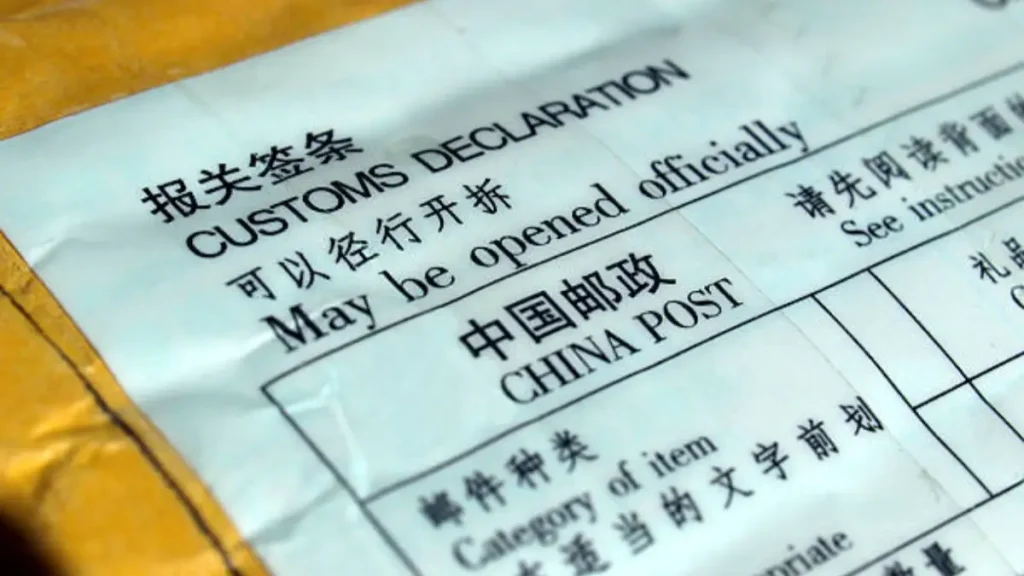
Navigating logistics and compliance for Chinese exports requires precision to avoid costly delays. The China Compulsory Certificate (CCC) is the primary barrier for 103 product types. Mandatory for both import and export, this certification involves rigorous testing against GB standards by authorized bodies. Non-compliance often results in customs seizures or total shipment forfeiture, with unexpected testing costs frequently exceeding $4,500 per category.
To safeguard your international supply chain, you must verify the supplier’s 18-digit Unified Social Credit Code. Ensure their business license explicitly includes “manufacturing” in its scope; otherwise, their export documents are legally void. Operational legality also hinges on strict fiscal deadlines. Factories must complete Annual Audit Reports by April 30 and CIT Reconciliation by June 30 to maintain their export license status. Missing these windows triggers immediate clearance blocks at the border. Always cross-reference registration data via the National Enterprise Credit System to ensure your partner is a legally registered manufacturer before initiating transit.
Templates for Compliance Requests
Using standardized templates is the most efficient way to secure mandatory certifications and protect your brand. These frameworks ensure you receive all necessary regulatory and technical documentation while establishing clear legal boundaries with your supplier.
Regulatory and Business Compliance Templates
To build a secure procurement foundation, your templates should mandate the submission of the 18-digit Unified Social Credit Code, export permits, and tax registration. This allows you to verify that the entity is a legally registered manufacturer rather than a trading company. For products in mandatory categories, your request must prioritize CCC certification and GB standard compliance. For lower-risk electronics, ensure your templates account for the self-declaration of compliance pathway to streamline the process.
Technical Data and IP Protection
A professional compliance request template must also cover international safety standards like RoHS, ASTM, and FCC. When requesting product samples, always include intellectual property (IP) protection clauses to prevent unauthorized production runs and define ownership of rejected prototypes. Finally, require evidence of third-party audits from recognized bodies like SGS, Intertek, or Bureau Veritas. These reports verify manufacturing consistency and social compliance, ensuring your China product sourcing strategy is transparent and audit-ready.
Final Thoughts
Navigating Chinese manufacturing requires more than finding a supplier; it demands a rigorous, phased approach to documentation. By verifying CCC certifications and GB standards before paying deposits, you transform high-risk procurement into a transparent, audit-ready supply chain. Overlooking these protocols leads to costly customs seizures and legal liabilities.
Partnering with a professional sourcing agent like ASG ensures your investment is protected. ASG manages factory audits and document validation on your behalf, safeguarding your brand reputation. Ultimately, a supplier’s transparency is the best indicator of their long-term viability in the global market.
Frequently Asked Questions
Which compliance certificates are mandatory for products manufactured in China?
The CCC (China Compulsory Certification) is the mandatory national quality and safety mark required for 17 categories covering 103–132 different products. If a product falls outside these categories, the CQC (China Quality Certification) is the primary voluntary certification used to demonstrate quality and reliability.
When is the ideal time to request documentation from a supplier?
You should request all compliance documentation before production begins. This includes the factory’s business license, ISO 9001 certificates, technical schematics, and labeling/manual requirements to ensure the manufacturer can meet regulatory standards before capital is committed.
How long does the CCC certification process typically take?
For products requiring new certification, the typical processing time is 60 to 90 days. This timeline includes the initial application submission, laboratory testing of product samples, and a formal factory inspection by Chinese authorities.
How often are Chinese factories inspected to maintain their compliance status?
To maintain valid certifications, factories must undergo follow-up inspections every 12 to 18 months as part of continuous monitoring. Most approved product categories require at least one successful factory inspection per year.
What specific documents are required for a standard compliance audit?
A standard audit package should include the manufacturer’s business license, application forms, ISO 9001 certification, product schematics, safety warnings, and user manuals. These documents verify the legal and technical capacity of the factory to produce export-ready goods.



-300x198.png)


