

Your Chinese supplier may assure you that their packaging is “EU compliant”, but under the new PPWR regulation, vague assurances are not enough. The EU now requires documented proof, quality control records, material declarations, recyclability data, and the legal liability falls on you, the importer.
This guide gives you a practical, step-by-step process for ensuring your Chinese supplier’s packaging actually meets EU PPWR standards. Whether you manage supplier relationships directly or work through a sourcing agent, these steps will help you build a defensible compliance system.
Which PPWR Requirements Apply to Your Packaging (Step 1)

Not every PPWR provision applies to every product. Before auditing your supplier, determine which requirements are relevant to your specific packaging:
| Packaging Type | Key PPWR Requirements | Effective Date |
|---|---|---|
| All packaging | Heavy metals ≤ 100 mg/kg; DoC; EPR registration | Aug 2026 (now) |
| Food-contact packaging | PFAS ≤ 25 ppb (single) / ≤ 250 ppb (total) | Aug 2026 (now) |
| E-commerce packaging | Void ratio ≤ 50% | Jan 2030 |
| All packaging | Recyclability Grade C minimum (≥ 70%) | Jan 2030 |
| Plastic packaging | Minimum recycled content targets | Jan 2030 |
| All packaging | Unified classification labelling (pictograms) | Aug 2028 |
Start by mapping every packaging component your supplier uses, primary packaging (the box, bag, or container), secondary packaging (shrink wrap, dividers), and tertiary packaging (cartons, pallets for shipping). Each component needs to be assessed individually.
Right Documentation to Request from Your Supplier (Step 2)

The most common mistake EU importers make is accepting a generic “compliance certificate” from their Chinese supplier without verifying what it actually covers. Under PPWR, you need specific, component-level documentation. For the exact request wording to send your supplier, see our guide on how to request Chinese factory compliance documents.
Essential Documents to Request
- Material Safety Data Sheets (MSDS) for every packaging component, including inks, adhesives, coatings, and laminates.
- Heavy metal analysis reports, from an ISO 17025-accredited lab, covering Pb, Cd, Hg, and Cr VI, with results expressed in mg/kg.
- PFAS test reports (for food-contact packaging), testing for the full range of PFAS substances, not just PFOA/PFOS.
- Recyclability assessment reports, evaluating the packaging against EU recyclability criteria.
- Material composition declarations, listing all materials by type and weight percentage.
Red Flags in Supplier Documentation
Watch for these warning signs when reviewing supplier-provided documents:
- Outdated test reports, reports older than 12 months may not reflect current production.
- Self-issued certificates, certificates printed on the supplier’s own letterhead without third-party lab validation.
- Generic scope, reports that cover “packaging” generically without specifying the exact component tested.
- Wrong test methods, reports using Chinese national standards (GB/T) instead of EU-relevant methods (EN standards or ISO).
- Missing substances, heavy metal reports that test only lead, ignoring cadmium, mercury, and hexavalent chromium.
Independent Verification of Supplier Test Reports (Step 3)
Do not rely solely on documents provided by your supplier. Independent verification is the only way to confirm compliance.
Option A: Third-Party Lab Testing
Send packaging samples to an independent, ISO 17025-accredited laboratory for testing. Major testing companies with offices in China include:
- SGS, offices in Shenzhen, Shanghai, Guangzhou, Ningbo.
- TÜV SÜD / TÜV Rheinland, offices in Shenzhen, Guangzhou, Shanghai.
- Intertek, offices in Shenzhen, Shanghai, Guangzhou, Ningbo.
- Bureau Veritas, offices in Shenzhen, Shanghai, Guangzhou.
Typical testing costs range from USD 200-500 per component for heavy metals analysis, and USD 500-1,500 for comprehensive PFAS screening. Turnaround time is typically 7-15 business days.
Option B: On-Site Verification
For high-volume or high-risk packaging, arrange an on-site audit at your supplier’s factory (and their packaging sub-suppliers’ factories, if applicable). Key audit items include:
- Reviewing raw material incoming inspection records.
- Verifying storage conditions for packaging materials (humidity, contamination risk).
- Checking whether the supplier tracks packaging batch numbers to test reports.
- Confirming that the packaging materials used in production match the documentation provided.
Clear Communication of PPWR Requirements to Your Supplier (Step 4)
Many Chinese suppliers are genuinely unaware of PPWR specifics. Communication is often the most effective compliance tool. Here is how to set clear expectations:
Create a Packaging Compliance Specification Sheet
Prepare a one-page document (in English and Chinese) that specifies:
- Maximum heavy metal limits: Pb + Cd + Hg + Cr VI ≤ 100 mg/kg.
- PFAS limits for food-contact packaging (if applicable).
- Prohibited substances list (reference EU REACH restrictions as well).
- Required documentation format (ISO 17025-accredited lab reports).
- Frequency of testing (at minimum: once per year, and whenever materials change).
- Consequences of non-compliance (order rejection, cost recovery).
Embed these requirements into your supplier agreement or purchase order terms. A written specification removes ambiguity and gives you contractual leverage if compliance issues arise.
Build Compliance into Your Supplier Evaluation
When qualifying new suppliers, add packaging compliance to your evaluation criteria alongside price, quality, and lead time. Suppliers who cannot provide basic packaging documentation are a regulatory risk, no matter how competitive their pricing.
Get Your China Sourcing and Packaging Compliance Checked by Our Team

Packaging Redesign Planning When Needed (Step 5)
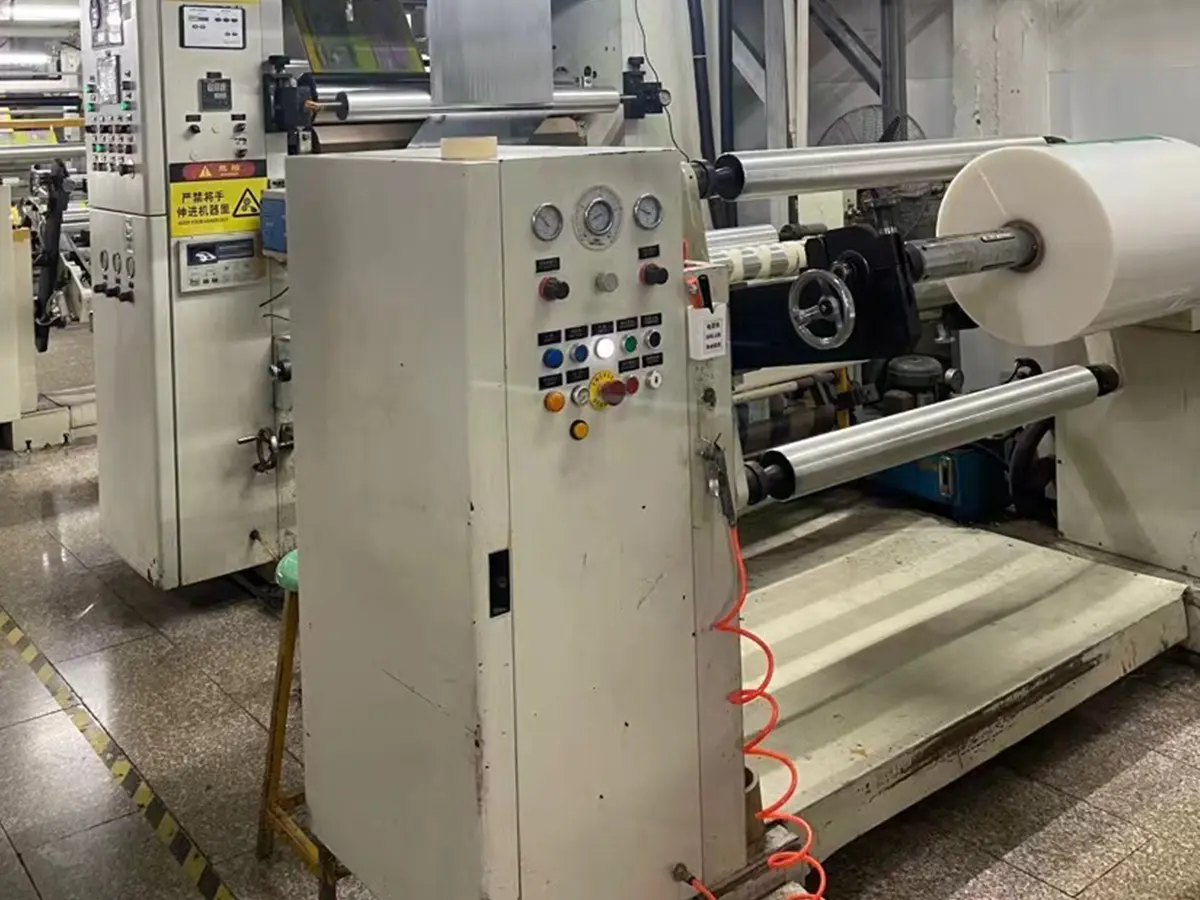
If your current packaging fails any PPWR requirement, you need a redesign plan. Common redesign scenarios include:
| Problem | Current Packaging | PPWR-Compliant Alternative |
|---|---|---|
| Heavy metals in ink | Standard solvent-based colored inks | Water-based or soy-based inks with low heavy metal content |
| PFAS in food packaging | Fluorinated grease-resistant coating | Silicone-based, wax-based, or clay-coated alternatives |
| Non-recyclable laminate | Multi-layer plastic-aluminum pouch | Mono-material PE or PP structure |
| Dark-colored plastic | Black PET tray | Clear or light-colored PET (detectable by NIR sorting) |
| Excessive void ratio | Oversized box with foam fill | Right-sized packaging with paper cushioning |
Work with your supplier, or a sourcing agent who can coordinate across packaging specialists, to identify alternatives that meet PPWR requirements without compromising product protection or increasing costs excessively. Request samples and run protective packaging tests (drop test, vibration test) before committing to a full production change.
Ongoing Compliance Monitoring of Your Supplier (Step 6)
PPWR compliance is not a one-time exercise. It requires continuous monitoring as your supply chain evolves.
Establish a Testing Schedule
- Initial qualification: Full test suite for all packaging components before first order.
- Annual re-testing: Repeat heavy metals and PFAS testing at minimum once per year.
- Change-triggered testing: Retest whenever the supplier changes materials, inks, coatings, or sub-suppliers.
- Spot checks: Random sampling of production batches for independent verification.
Track Regulatory Updates
PPWR is being implemented in phases through 2040. Key upcoming milestones include:
- December 31, 2026: EU Commission publishes the Substance of Concern (SoC) list; additional substances may be restricted.
- February 2027: Packaging minimisation calculation rules finalized.
- August 2028: Mandatory unified classification labelling (pictograms on all packaging).
- January 2030: Recyclability Grade C and void ratio requirements take effect.
Subscribe to EU regulatory updates or work with a compliance consultant to stay ahead of each milestone. Early preparation avoids last-minute scrambling and costly emergency redesigns.
Common Mistakes Importers Make with Chinese Supplier Packaging
- Assuming “EU compliant” labels mean anything. Without supporting test data from accredited labs, a supplier’s self-declared compliance has no legal weight.
- Testing only the primary packaging. PPWR covers all packaging layers, including tape, labels, inserts, and shipping cartons.
- Ignoring sub-suppliers. Your supplier may buy packaging from a third party. You need documentation from the entire packaging supply chain, not just your direct supplier.
- Waiting until 2030. Heavy metals, PFAS, DoC, and EPR requirements are already in force. Waiting to act means you are already non-compliant.
- Not keeping records. PPWR requires documentation retention of 5-10 years. Establish a digital archive system now.
Frequently Asked Questions
Can I trust my Chinese supplier’s existing EU compliance certificates?
Not without independent verification. Request the underlying test reports from ISO 17025-accredited laboratories, check that the scope covers your specific packaging components, and confirm the reports are less than 12 months old. Self-issued certificates have no regulatory standing under PPWR.
How much does independent packaging testing cost?
Heavy metals analysis at a major lab (SGS, TÜV, Intertek, Bureau Veritas) typically costs USD 200-500 per component. Comprehensive PFAS screening costs USD 500-1,500 per component. Total costs depend on how many packaging components your product uses.
Do I need to test every single order?
No. PPWR does not mandate per-batch testing. Best practice is initial full testing, annual re-testing, and re-testing triggered by any material or supplier change. Random spot checks on production batches add an extra layer of assurance.
What if my supplier refuses to provide packaging documentation?
This is a serious red flag. Make documentation a contractual requirement. If a supplier cannot or will not provide packaging material data, consider qualifying an alternative supplier. The compliance risk, and the potential financial penalty, far outweighs the inconvenience of switching.
Does PPWR require packaging to be recyclable in China or in the EU?
Recyclability is assessed against EU collection and sorting infrastructure, not Chinese infrastructure. Your packaging must be recyclable using systems available in the EU countries where it will be sold.
How do I handle packaging from multiple sub-suppliers?
Map the full packaging supply chain: identify every sub-supplier providing packaging components. Request documentation from each one. A sourcing agent can help coordinate this process, especially when your direct supplier is reluctant to reveal their packaging sources.
Need help verifying your Chinese supplier’s packaging compliance? Asian Sourcing Group provides on-site supplier audits, independent test report verification, and packaging redesign coordination to help EU importers meet PPWR standards.


-300x198.png)


