
For many Western B2B buyers, working with Chinese factories can feel unpredictable. A simple “yes” does not always mean agreement, and key decisions are often made at a higher level than the first point of contact.
Success depends on understanding how factory decisions are actually made. Beyond contracts, formal authority structures and cultural factors such as hierarchy and “face” (mianzi) shape daily operations and priorities. This guide explains the key forces behind this system and how to adjust sourcing strategies to reduce misunderstandings and improve execution.
Structural Foundations of Decision Making

In Chinese factories, decision-making follows a layered governance structure that combines formal legal roles with a highly centralized operational hierarchy. While company law defines oversight and execution responsibilities, in practice, most decisions are ultimately concentrated at the top management level, particularly the General Manager or Director.
Legal Authority Framework
Chinese companies are formally structured with separate roles for decision-making and supervision:
| Governance Level | Main Role | Practical Impact on Decisions |
|---|---|---|
| Board of Directors | Strategic decisions and GM appointment | Defines direction, but does not manage daily operations |
| Board of Supervisors | Compliance and internal oversight | Monitors operations but does not influence production priority |
| General Manager | Daily operations and production control | Main decision-maker for production schedule and order priority |
| Employee Representatives | Internal balance (mainly large or state-owned firms) | Limited influence on external business decisions |
Operational Decision Center
Although governance structures exist on paper, real decision-making in Chinese factories is highly centralized. The General Manager or factory Director usually holds final authority over production schedules, staffing, and order priorities. This means most operational changes cannot move forward without senior approval.
Middle management mainly focuses on execution rather than decision-making. They coordinate daily production tasks and follow instructions from above, but rarely have the authority to adjust timelines or resolve technical issues independently. As a result, even small changes often need to be escalated to top management.
In smaller factories, this centralization is even stronger. A single executive may control both strategic and operational decisions, which makes decision-making faster in some cases but also highly dependent on one person.
Standards and Technical Oversight
Beyond internal structure, factories are also influenced by national industrial standards and compliance systems. These external rules define how products must be designed, produced, and certified before they can be shipped.
Technical Committees set these standards and determine the technical requirements factories must follow. These rules affect production methods, certification steps, and quality expectations across industries.
Because compliance is mandatory, factories cannot ignore these requirements. If a product does not meet standards, it cannot move forward to approval or shipment, even if production is completed internally. This often forces factories to adjust schedules based on certification readiness rather than internal planning.
Cultural Drivers Behind Decisions

In Chinese factories, decisions are not driven only by formal rules or technical requirements. Cultural logic plays a central role in how priorities are set, how communication is interpreted, and how quickly decisions move through the organization. Understanding these cultural drivers is essential for predicting behavior and avoiding delays caused by misunderstanding or misalignment.
Face and Professional Reputation
“Face” (mianzi) is a key concept in Chinese business culture. It represents a person’s reputation, respect, and social standing within the professional environment.
In factory decision-making, face strongly influences how information is communicated and how responses are shaped. Positive acknowledgment is often used to build trust and maintain cooperation, while direct criticism can damage relationships and slow down decision-making. For this reason, indirect communication is commonly used to avoid embarrassment or public confrontation.
Because of this cultural logic, maintaining face is often more important than providing direct answers, especially in formal meetings or group settings where hierarchy is visible.
Hierarchy and Seniority Logic
Factory decision-making is also strongly shaped by hierarchy and seniority. Authority is concentrated at the top, and lower-level staff typically avoid making independent decisions without approval.
In practice, final approval almost always comes from senior management, while middle management focuses mainly on execution rather than decision-making. Open disagreement with senior figures is generally avoided, especially in formal environments.
As a result, decisions usually move upward for approval and then flow downward for execution. Even small adjustments may require senior review, which can slow down response time compared to more decentralized organizational structures.
How Information Shapes Decisions

In Chinese factory environments, decisions are strongly influenced by how information is communicated rather than only what is communicated. Messages are often indirect, context-dependent, and filtered through hierarchical layers. As a result, correctly interpreting signals is just as important as receiving the information itself.
Indirect Communication Patterns
Communication in factories is often indirect, particularly when discussing sensitive topics such as delays, capacity limitations, or quality risks.
Instead of direct refusal, factories may use indirect expressions that require interpretation. For example, phrases like “it is difficult” may indicate capacity constraints or timing issues, while silence or vague responses can suggest hesitation, uncertainty, or disagreement.
Because of this communication style, literal interpretation can easily lead to misunderstandings. In many cases, the real meaning is not contained in the exact words, but in tone, timing, and context.
Language and Interpretation Gaps
Language differences further complicate communication in decision-making processes. Only a limited portion of factory staff are fluent in English, and technical instructions may be misunderstood when they are overly complex or detailed.
In addition, cultural translation gaps can distort meaning even when basic language understanding exists. To reduce these risks, communication is often simplified and supported with clearer structures. Short sentences, direct wording, and visual tools such as annotated images or short videos are commonly used to improve clarity and reduce ambiguity.
Confirmation Mechanisms
To reduce misunderstandings, factories often rely on structured confirmation processes. Instructions are typically repeated back to confirm understanding, and written summaries are used after discussions to ensure alignment.
In many cases, visual references are also used to verify technical details before production begins. This confirmation loop helps reduce assumption-based errors and ensures that both sides share the same understanding before execution starts.
Scale Your Business with Risk-Free Product Sourcing in China

How Decisions Are Implemented

Once decisions are made in Chinese factories, they are implemented through clearly defined production roles and control systems. Execution is typically structured, with responsibility divided between design input, production management, and quality verification. This ensures decisions move from approval to production in a controlled and traceable way.
Production Responsibility Models
Responsibility during execution depends heavily on the manufacturing model used.
- OEM (Original Equipment Manufacturer)
- Factory focuses on producing according to provided designs
- Responsibility is mainly execution and accuracy
- Limited involvement in product design decisions
- ODM (Original Design Manufacturer)
- Factory is responsible for both design and production
- Greater control over technical specifications
- Higher flexibility but also higher responsibility
These models define how much control the factory has over production decisions and how accountability is shared between both sides.
Quality and Compliance Systems
Execution is controlled through structured audit and inspection systems that ensure production follows approved specifications at every stage.
Factories are evaluated based on production capacity, quality management processes, and compliance with regulatory standards. These systems also affect production priority, since non-compliant orders cannot proceed to shipment. Rather than being occasional checks, these evaluations are part of an ongoing control process that continuously influences how responsibility is enforced during production.
Key verification stages typically include in-line inspections during production and final pre-shipment inspections before goods are released. These checkpoints help ensure that technical requirements and quality standards are met before shipment, reducing the risk of defects, delays, or compliance issues.
Why Expectations and Reality Diverge

In Chinese manufacturing, production outcomes do not always match initial plans. Even when decisions are clearly communicated and execution systems are in place, external rules and operational constraints can change priorities during the process. This creates gaps between expectations and actual delivery timelines.
Regulatory and Standards Constraints
Manufacturing in China is governed by a national standards system managed through Technical Committees and regulatory authorities. These standards define the technical and compliance requirements that products must meet before approval.
Because these standards are mandatory, they often take priority over project-specific instructions. If a product does not fully meet the required specifications, adjustments or re-certification may be needed before production can continue.
These standards also follow structured update cycles, meaning changes cannot be made quickly in response to individual project demands. As a result, product planning must align with regulatory requirements from the beginning to avoid delays later in the process.
Operational Behavior in Practice
Beyond formal standards, real factory operations are influenced by compliance pressure and production constraints.
Factories may experience unexpected audits related to safety, labor, or environmental regulations. These inspections can temporarily disrupt production schedules or shift internal priorities without prior notice.
In addition, changes in policy direction and procurement rules can require factories to adjust sourcing, documentation, or production processes while orders are already in progress. This can slow down execution even when planning remains unchanged.
Because of these factors, production timelines are often adjusted dynamically. Factories prioritize compliance readiness and operational stability, which can lead to schedule changes that are outside of direct control from either side.
Adapting Your Approach for Better Results

Improving outcomes in Chinese manufacturing requires more than understanding how factories operate. It also requires adjusting your own approach to match internal decision logic, communication style, and operational constraints. When your methods align with factory systems, production becomes more reliable and easier to manage.
Communication Strategy Alignment
Successful communication in factory environments depends on reducing confrontation and increasing clarity. Direct pressure or overly aggressive follow-ups often slow down internal decision-making because they disrupt hierarchy and require additional approval layers.
A more effective approach is to use structured, neutral communication that allows factory teams to process requests internally. This helps decisions move through the proper channels more smoothly.
Structured Verification Systems
Many production issues come from assumptions rather than execution errors. For this reason, verification systems play a critical role in improving reliability.
Clear written instructions, visual references, and confirmation steps help ensure both sides share the same understanding before production begins. This reduces misinterpretation and improves execution accuracy in later stages.
Visual tools are especially effective for technical specifications, where text alone may not fully capture required details.
Long-Term Sourcing Alignment
Better outcomes are achieved when sourcing relationships are built on long-term cooperation rather than one-time transactions. Factories tend to prioritize partners who provide stable demand and consistent communication.
Flexibility in order structure, such as adjusted minimum order quantities or phased production planning, can strengthen trust between both sides. Over time, this leads to better scheduling priority and more reliable production execution.
What Effective Alignment Achieves
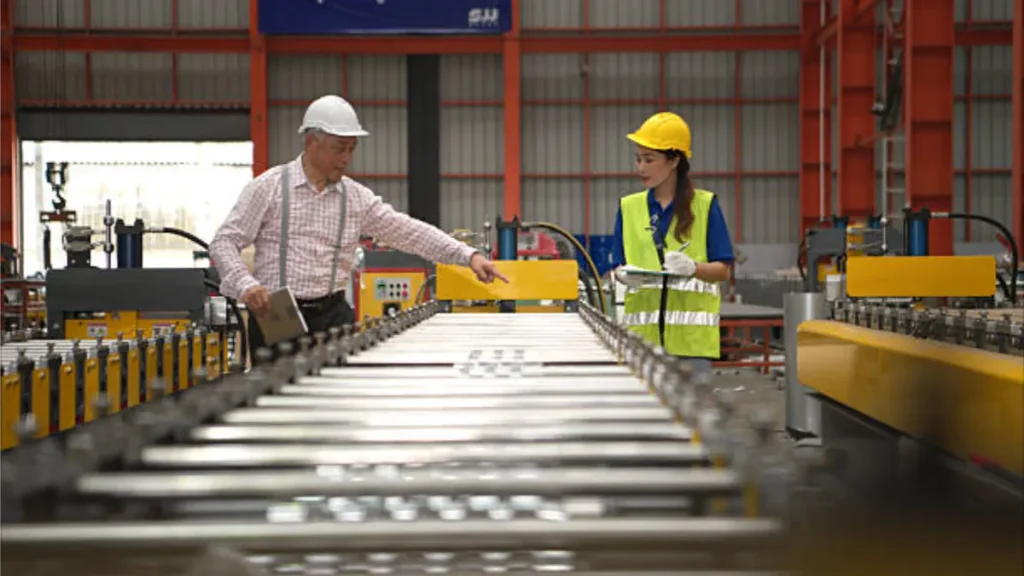
When communication, verification, and sourcing strategy are properly aligned with factory decision systems, the overall production process becomes significantly more consistent. Instead of constant adjustments and misunderstandings, both sides operate within a clearer and more predictable framework. This also reduces uncertainty during production planning, as expectations are established more clearly before execution begins, allowing factories to allocate resources with greater confidence.
Operational Improvements
Better alignment leads to noticeable improvements in day-to-day production performance. Communication becomes clearer, fewer instructions are misinterpreted, and decision-making flows more smoothly through factory hierarchy.
Over time, this reduces delays caused by repeated clarification or internal re-approval. Production schedules become more consistent, and issues are identified earlier before they escalate into larger disruptions. It also improves coordination between different departments inside the factory, as information does not need to be repeatedly escalated or re-checked.
Industry Practice Validation
These improvements are not theoretical. In real manufacturing environments, factories that adopt structured communication and lean coordination methods tend to achieve more stable output and stronger long-term cooperation with partners.
When sourcing relationships are built on clarity and consistency, factories are more willing to prioritize orders and invest effort in maintaining quality standards. This creates a more scalable system that benefits both sides. In many cases, it also improves supplier responsiveness over time, as trust in communication reliability increases and fewer operational surprises occur during production cycles.
Final Thoughts
Understanding Chinese factory decision-making is not just about communication — it directly impacts delivery speed, priority, and production stability. When structure, culture, and execution are aligned, most delays become predictable and manageable.
For many sourcing teams, the real challenge is not finding suppliers, but managing how decisions actually move inside factories.
If you want fewer delays and more control over production timelines, working with an on-the-ground sourcing partner can make the difference.
Partner with ASG to turn factory complexity into predictable production performance.
Frequently Asked Questions
Who makes the final decisions in Chinese factories?
Decisions are made exclusively by top-level management, such as the Chairman or CEO. Middle-level managers and factory supervisors typically execute plans and implement instructions without taking individual initiative.
Why does a factory representative say ‘yes’ but not follow through?
In this cultural context, ‘yes’ often indicates an acknowledgment of the hierarchy or the speaker’s request rather than a firm commitment. This indirect communication style is used to maintain harmony and avoid direct confrontation.
How does the factory hierarchy impact project timelines?
Information usually flows through 3–5 hierarchical levels (top to middle to lower). This requirement for top-down approval and reverse routing often slows down communication and production speed compared to Western flat organizational models.
What is the biggest mistake Western buyers make regarding factory staff?
Many Western buyers incorrectly assume junior or middle-management staff have the autonomy to make decisions or provide direct ‘no’ refusals. Expecting direct answers from staff who lack the authority to give them leads to significant misunderstandings.
How can I adapt my communication to get faster results?
To improve efficiency, identify and engage senior leaders early in the process. Map the factory’s hierarchy to understand who holds authority and use formal respect to ensure your requests are prioritized without causing internal friction.



-300x198.png)


