
For B2B procurement teams, a supplier’s initial low quote can sometimes hide a bait-and-switch pricing strategy, leading to post-contract price increases of up to 40%. Knowing how to prevent being overcharged is not only about negotiation—it requires the ability to identify pricing risks through structured data analysis before signing any contract.
This guide explains how to secure pricing stability across the sourcing process. It covers a practical price benchmarking framework, how to identify hidden cost drivers in supplier quotations, and how to use Should Cost Analysis to validate pricing. You will also learn common industry discount ranges (typically 10% to 25%) and key contract mechanisms such as Economic Price Adjustments that help protect long-term procurement costs.
Red Flags in Pricing Behavior

Pricing red flags are unusual supplier behaviors—such as significantly below-market quotes, limited cost transparency, or sudden mid-contract price increases—that suggest potential bait-and-switch tactics, financial instability, or cost manipulation.
Early Warning Signs in Supplier Quotations
Unusually low pricing (20–30% below market averages) is often a sign of low-balling strategies, where suppliers attract orders with unrealistic quotes and later increase prices through “material cost adjustments” after deposit payment.
A lack of Bill of Materials (BOM) transparency is another major warning sign. Reliable manufacturers typically provide detailed cost breakdowns, while vague “lump sum” pricing can hide hidden margins or material substitution risks, making it difficult to verify product quality.
Pricing that does not respond to global raw material movements (such as LME metal indices or textile benchmarks) is also suspicious. This may indicate the use of lower-grade or non-standard materials that do not align with market pricing trends.
Financial and Compliance Issues During Production
Requests to change payment destinations—such as offshore accounts or personal bank details—are a serious financial and compliance red flag. These changes may indicate fraud risk, tax evasion, or internal instability within the supplier’s organization, and may also signal a breach of standard procurement compliance procedures.
Another major risk is customs or HS code manipulation, where suppliers suggest under-declaring product value or misclassifying goods to reduce tariffs. This exposes importers to legal penalties, shipment delays, and potential seizure of goods, as well as serious regulatory compliance violations in cross-border trade.
Sudden changes in payment terms—such as shifting from standard 30/70 terms to 100% upfront payment—often signal cash flow problems or financial distress, increasing the risk of production delays or contract failure and raising potential financial compliance concerns in supplier governance.
Benchmarking Price Across Suppliers
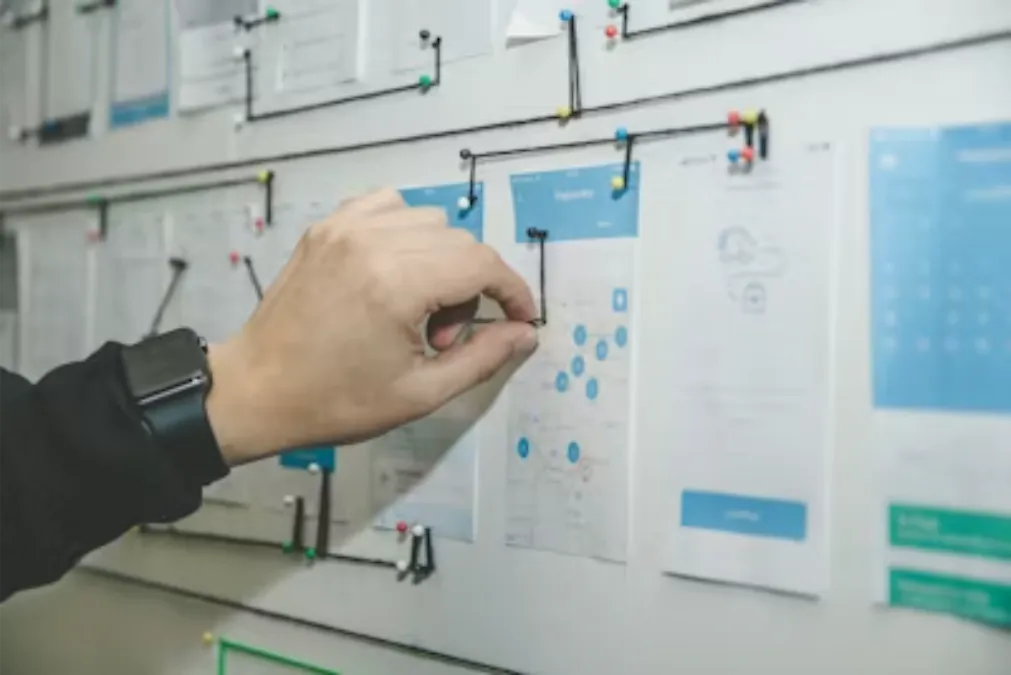
Price benchmarking is a structured process for comparing Total Cost of Ownership (TCO) across multiple suppliers. It goes beyond unit price by including shipping, duties, taxes, and volume discounts, while filtering out abnormal quotes. This allows procurement teams to establish a realistic market range and negotiate based on data rather than assumptions.
| Benchmarking Phase | Technical Focus | Strategic Outcome |
|---|---|---|
| Data Normalization | Like-for-like specifications and volume breaks | Removes scope variation bias |
| TCO Aggregation | Unit price, logistics, duties, and taxes | Enables true cost comparison |
| Outlier Filtering | Removal of abnormal price quotes | Establishes reliable market baseline |
Standardizing Price Comparison (Normalization)
Effective benchmarking starts with a structured process: defining objectives, building standardized templates, collecting supplier data, analyzing results, and sharing findings with stakeholders. This ensures pricing decisions are aligned with real market conditions.
A key requirement is enforcing a strict like-for-like comparison. All suppliers must quote based on identical specifications, service levels, and quantity tiers. This removes distortions caused by inconsistent scope definitions and ensures price differences reflect real supplier efficiency.
Standardized quotation templates further improve accuracy by ensuring all suppliers report costs in the same format. This reduces missing data, speeds up analysis, and ensures key cost elements—such as volume discounts and tier pricing—are not overlooked.
Total Cost of Ownership (TCO) and Outlier Detection
Accurate benchmarking transcends simple unit price comparison by calculating the Total Cost of Ownership (TCO). This model aggregates the base unit price with logistics costs, customs duties, taxes, and administrative overhead. By accounting for these variables, procurement professionals can achieve a true ‘apples-to-apples’ comparison that reflects the actual cost impact on the organization’s bottom line.
Data validation is further refined through statistical outlier analysis. By identifying and disqualifying abnormally high or low price points—which often indicate a misunderstanding of the RFP or unsustainable business practices—teams can calculate a reliable baseline market range. This average, derived from a qualified pool of the remaining suppliers, serves as the primary benchmark for informed negotiations.
Finally, high-value benchmarking integrates non-price Key Performance Indicators (KPIs) into the evaluative framework. Factors such as Minimum Order Quantities (MOQs), lead times, and historical on-time delivery performance are weighted alongside TCO. This holistic view ensures that the selected supplier offers the best overall value rather than merely the lowest nominal price, reducing long-term procurement risks.
How to Decode Hidden Cost Lines

Decoding hidden costs means breaking down lump-sum supplier quotes into clear, itemized components such as material grades, labor categories, and engineering requirements. This helps importers identify inflated pricing and uncover where assumptions or hidden conditions have been built into the offer.
| Infrastructure Category | Est. Cost (Per Mile) | Hidden Complexity Factors |
|---|---|---|
| New Overhead Lines | $86,700 – $1,000,000 | Natural air cooling, standard accessibility, rural/urban variance. |
| New Underground Lines | $297,200 – $4,500,000 | Excavation, specialized technicians, high-density cooling needs. |
| Existing Line Conversion | $2,000,000 – $20,000,000 | Site-specific engineering, unstated infrastructure contingencies. |
From Lump-Sum Quotes to Itemized Pricing
Lump-sum pricing is one of the most common ways suppliers hide additional costs. A proper quotation should clearly specify material specifications, brand standards, and detailed labor categories instead of vague terms like “general production cost” or “labor fee.”
Breaking costs into itemized parts allows buyers to compare suppliers more accurately and reduces the risk of scope creep or post-contract price changes. It also helps prevent substitution risks, where lower-quality materials are used after the order is confirmed. Requiring fixed material specifications and approved samples is essential to maintain cost and quality control.
Comparing Physical and Engineering Cost Differences
Hidden costs often come from unspoken engineering complexity or site-specific requirements that are not included in the initial quote. These can significantly increase final production costs if not identified early.
To detect these issues, buyers should benchmark pricing against real-world production standards and historical cost ranges. Large cost gaps between suppliers often indicate hidden assumptions related to tooling complexity, customization depth, or production environment constraints.
Cross-checking supplier quotes with industry references or past project data helps validate whether pricing is realistic or artificially inflated. This ensures procurement decisions are based on verified cost logic rather than incomplete supplier assumptions.
Scale Your Brand with Stress-Free China Sourcing

Negotiation Tactics That Work

Effective supplier negotiation relies on data-driven preparation, including BATNA and Should Cost Analysis, combined with relational frameworks such as the 5 C’s and the 70/30 listening rule. By focusing on Total Cost of Ownership (TCO) instead of only unit price, buyers can secure more sustainable savings and stronger supplier partnerships.
Data-Driven Preparation and BATNA Strategy
Defining the BATNA (Best Alternative to a Negotiated Agreement) is the foundational step in establishing a clear walk-away point. This strategy utilizes extensive market research and internal cost analysis to set a realistic target price, ensuring that procurement professionals enter discussions with a viable fallback position that prevents over-commitment to a single supplier.
Conducting a Should Cost Analysis allows procurement teams to benchmark supplier quotes against specific cost drivers and technical feasibility. By breaking down quotes into material costs, labor, and overhead, buyers can validate pricing against market benchmarks and identify areas where a supplier’s bid may be disconnected from industrial reality.
Shifting the focus from unit price to Total Cost of Ownership (TCO) is critical for capturing long-term value. This approach accounts for the full product lifecycle, including maintenance, technical support, training, and disposal costs, revealing that the lowest upfront quote may often result in higher aggregate expenses over time.
Leveraging advanced procurement tools, such as CADDi Drawer, enables negotiators to link engineering drawings directly to historical price data. This capability facilitates evidence-based cost discussions, allowing buyers to present factual data regarding part similarity and previous purchase orders to ground the negotiation in objective technical history.
Collaborative Negotiation and the 70/30 Listening Rule
Applying the 70/30 Rule is a vital communication tactic where the negotiator spends 70% of the session listening and only 30% speaking. This psychological approach helps identify hidden supplier pain points, such as capacity fluctuations or logistics hurdles, which can be leveraged to find mutually beneficial alliance opportunities.
Utilizing the 5 C’s Framework—Clarify objectives, Communicate dialogue, Collaborate on benefits, Compromise on concessions, and Close the agreement—provides a structural roadmap for complex manufacturing deals. This systematic method ensures that both parties remain aligned on the scope of work while building the trust necessary for long-term sourcing stability.
Using anchoring tactics with market benchmarks helps set the baseline for negotiation early in the Request for Quotation (RFQ) process. By introducing data-backed price expectations during the initial technical review, buyers can define the bargaining range before the supplier submits a final proposal, maintaining control over the narrative.
Structuring concessions around non-price levers can successfully move negotiations past a price deadlock. Buyers can offer strategic trade-offs, such as extending payment terms or providing professional testimonials for the supplier, in exchange for volume commitments or prioritized production lead times, creating value without eroding the supplier’s margin.
Volume Levers and Loyalty Discounts

Volume levers are pricing mechanisms such as tiered discounts or all-unit discounts that reduce unit cost as order quantities increase. Understanding common industry breakpoints (100, 500, 1,000 units) and typical discount ranges (5%–25%) helps buyers verify whether supplier pricing is truly competitive during scale-up.
Tiered vs Volume-Based Discount Models
Suppliers generally use three main pricing structures: tiered pricing, all-units pricing, and volume brackets.
Tiered pricing applies different prices to different quantity ranges. For example, the first 100 units may be charged at base price, while units from 101–500 receive a lower rate.
All-units pricing activates a discount once a volume threshold is reached, applying the reduced price to the entire order. This model is more aggressive and can significantly reduce total cost once scale is achieved.
Volume brackets are fixed pricing tiers assigned to specific quantity ranges, simplifying wholesale quotations and making pricing more predictable across production batches.
From a procurement strategy perspective, buyers can improve cost efficiency by negotiating tier placement and threshold levels. Aligning discount breaks with expected order growth helps reach lower pricing tiers faster and improves long-term unit economics.
Industry Benchmarks for Discount Ranges
Evaluating supplier pricing requires comparing quotations against common industry volume discount benchmarks. In B2B sourcing, typical breakpoints occur at 100, 500, 1,000, and 5,000+ units, where pricing structures become progressively more favorable as order volume increases.
At higher volumes, buyers generally expect total discounts in the range of 10% to 25%, depending on product category and manufacturing complexity. For early-stage or small-batch orders, discounts are usually more conservative, typically around 5% to 15%, reflecting limited economies of scale.
| Order Volume | Expected Discount Range | Pricing Behavior |
|---|---|---|
| 0–99 units | 0% | Base pricing applies |
| 100–499 units | ~5%–10% | Early-stage discounting |
| 500–999 units | ~10%–15% | Standard wholesale scaling |
| 1,000+ units | ~15%–25% | Full bulk pricing advantage |
In practice, these benchmarks serve as a reference framework rather than fixed rules. Procurement teams should compare supplier quotations against these ranges to detect inconsistencies. If pricing improvements at key volume thresholds fall significantly below expected levels, it may indicate limited cost efficiency, weak scaling structure, or lack of transparent pricing strategy, all of which require further negotiation or supplier reassessment.
Contracts to Lock in Prices

To prevent post-contract price spikes of up to 40%, businesses use fixed-price contracts combined with Economic Price Adjustment (EPA) clauses. These legal frameworks help stabilize costs by locking in agreed pricing while allowing controlled adjustments based on market or raw material changes.
Fixed-Price Agreements for Cost Stability
Organizations can mitigate the risk of 20% price increases frequently seen after the first year of a vendor relationship by establishing a predetermined total cost for defined scope, quality standards, and milestones. Fixed-price models are strategically designed to incentivize vendor efficiency and shift the burden of operational waste away from the buyer. This approach is essential to prevent the 40% discount loss often experienced by organizations that lack formal price lock guarantees during initial contract negotiations.
To ensure these frameworks remain durable during market volatility, contracts must incorporate explicit clauses regarding scope changes and performance-based models. Without these detailed specifications, vendors may attempt to reject locked Purchase Orders (POs) when their own input costs fluctuate. By cementing these terms legally, businesses can prevent mid-term renegotiations and protect against supplier overcharges, ensuring that the initial value of the contract remains intact through the entire lifecycle of the agreement.
Key Clauses: Price Adjustments and Volume Commitments
Key contract mechanisms such as Economic Price Adjustments (EPA) and cost-sharing provisions (e.g., 50/50 models) help manage raw material fluctuations while maintaining predictable baseline pricing. These clauses allow price adjustments only when supported by verified market indices.
In some industries, pricing is linked to index-based or future-referenced models, where costs are tied to commodity benchmarks rather than fixed assumptions. This helps stabilize procurement for high-volume orders while maintaining flexibility during market volatility.
Contracts may also include customer price sheets or pricing schedules, which define fixed rates for future orders or product variants. To ensure long-term stability, escalation clauses should be tied to transparent cost indices and capped annual increases, preventing uncontrolled price inflation while still allowing for justified adjustments.
When to Replace Your Supplier

Suppliers should be replaced or re-qualified when they exceed 12 months of production inactivity, fail to notify buyers of manufacturing location changes, or repeatedly submit unapproved process deviations. These issues often trigger formal Performance Improvement Plans (PIPs) or full supplier termination when unresolved.
Triggers for Requalification and Risk Signals
Mandatory supplier re-qualification is a critical requirement after 12 months of production inactivity to ensure that manufacturing capabilities and frozen process parameters have not degraded. Before shipments can resume, the supplier must undergo a re-evaluation to confirm compliance with original specifications. Per VDA Volume 2 standards, new Production Process Flow (PPF) approval is also triggered by production suspensions exceeding one year, the introduction of new sub-tier suppliers, or any significant manufacturing relocations.
In addition to timeline-based triggers, suppliers must provide mandatory notification for Class C process changes. These include modifications to inspection plans, changes in packaging materials, or shifts in subcontractors. Technical oversight also extends to environmental conditions; any significant changes in temperature or humidity controls within the production environment must be disclosed to Supplier Quality Engineering (SQE) to prevent impacts on product integrity.
Escalation Process and Supplier Offboarding
Preventing supplier overcharges requires a shift from passive procurement to active, data-driven oversight. Instead of relying on vague quotes or verbal agreements, businesses must consistently challenge pricing through TCO benchmarking, structured RFQs, and detailed cost breakdowns. This helps close the information gap that suppliers may exploit through hidden fees, low-balling, or unclear pricing structures.
Long-term cost stability depends on combining strong negotiation positioning (BATNA) with strict contract discipline, including itemized pricing, volume-based discounts, and economic price adjustment clauses. When supported by consistent supplier evaluation and transparent communication frameworks, procurement becomes a controlled system rather than a reactive process.
Companies that institutionalize these practices do more than reduce costs—they build a resilient and scalable supply chain that can grow without losing financial control or operational visibility.
Final Thoughts
Preventing supplier overcharges requires a shift from passive procurement to data-driven oversight. By identifying pricing red flags such as “bait-and-switch” low-balling and opaque lump-sum quotes, and applying Total Cost of Ownership (TCO) benchmarking, businesses can close the information gaps that lead to inflated costs. The strongest protection comes from moving to itemized contracts, supported by economic price adjustments and volume-based pricing structures.
Long-term cost stability depends on strong negotiation discipline, including BATNA positioning and strict compliance with sourcing standards. Using structured RFQs and negotiation frameworks helps ensure transparency and reduces the risk of hidden fees or unexpected price changes.
For buyers managing production in China, working with a China sourcing and supply chain partner like ASG can help bridge execution gaps through on-the-ground supplier management, quality control, and OEM coordination.
Frequently Asked Questions
What are the most common tactics suppliers use to overcharge buyers?
Suppliers typically overcharge through ‘price creep’—starting with low quotes followed by rapid increases—invoice add-ons for unapproved services (like uniform items or phone bills), phantom billing for items never delivered, and double billing. Research indicates that transportation expenses can see overcharge rates as high as 83.7%.
How can I accurately benchmark prices across different suppliers?
To benchmark effectively, request granular cost breakdowns via RFQs with identical specifications. These breakdowns should separate raw material, fabricating, secondary processes (like coating), and logistics. Comparing these specific lines across current and competing suppliers reveals where margins are being inflated.
Does high order volume provide protection against overcharging?
Yes. Higher volume signals scale and professional experience to the factory. It allows buyers to negotiate fixed pricing and terms while enabling production capacity checks within agreements, which significantly reduces the risk of arbitrary price hikes.
Which contract clauses are most effective at locking in prices?
Effective contracts should memorialize fixed pricing terms, explicitly prohibit auto-renewals that include price increases, and bar all unauthorized surcharges. Crucially, they must specify a mandatory approval process for any ‘add-on’ costs to prevent them from appearing unexpectedly on invoices.
How do I signal to a factory that I am an experienced buyer?
Experience is signaled through the use of repeated large-scale RFQs, providing locked contracts for review, and sharing detailed audit feedback. These actions demonstrate to the factory that you have the systems in place to detect price manipulation and phantom billing.



-300x198.png)


