Awning windows, the top-hung style that opens outward from the bottom, are one of the most exported window types from Asia, and one of the easiest to get wrong. The frame material you specify decides not only the unit price, but also your freight cost, your certification path, your warranty exposure, and how the windows perform five years after installation.
For importers, builders, developers, and procurement teams buying awning windows from Asian manufacturers, the main considerations extend beyond the quoted unit price. The five frame options below are compared by cost, thermal performance, durability, shipping requirements, and maintenance needs, followed by destination-market compliance requirements and quality-control checks for bulk orders.
Awning Window Materials at a Glance
| Material | Durability | Thermal Performance | Indicative FOB Range* | Maintenance | Best For |
|---|---|---|---|---|---|
| Aluminum (non-thermal-break) | Excellent, 25+ years | Poor unless glazed accordingly | US$70-150/m² | Very low | Warm climates, commercial projects |
| Thermal-break aluminum | Excellent, 25+ years | Very good | US$120-260/m² | Very low | Cold or mixed climates, energy-code markets |
| uPVC (Vinyl) | Good, 15-25 years | Excellent | US$55-120/m² | Very low | Budget residential, temperate markets |
| Wood / aluminum-clad wood | Very good if built well | Excellent | US$200-450/m² | Clad: low; solid: high | Premium residential, villas, resorts |
| Fiberglass / composite | Excellent, 30+ years | Very good | US$150-300/m² | Very low | Coastal, high-end eco projects |
*Indicative FOB ranges for standard configurations from Asian manufacturers. Final pricing depends on glass specification, finish, hardware, and order volume. Treat these as orientation figures, not quotes.
How to Evaluate a Frame Material for a Bulk Order

Before looking at specific materials, it helps to fix the criteria. When you are ordering hundreds of units instead of one, six factors decide whether a material is “best”:
- Strength-to-weight ratio. Awning windows open outward on friction stays at the top. The heavier the sash, the more stress on the hardware; and the sooner the window sags or refuses to stay open. Frame rigidity also determines the maximum sash size you can offer.
- Thermal performance. Energy codes in North America, Europe, and Australia increasingly set minimum U-factor/thermal transmittance requirements. A cheap frame that fails compliance is not cheap.
- Weathering in the target market. UV intensity, humidity, salt air, and temperature swings age materials very differently. A finish that lasts a decade in Europe may chalk in three years in the Gulf or Southeast Asia.
- Packing density and freight. Some systems knock down flat (KD) for shipping; others ship fully assembled with glass. Freight can swing total landed cost by 15-25%.
- Certification fit. Certain markets effectively mandate certain materials or test reports, more on this below.
- After-sales risk. Welded and mechanically joined corners behave differently over time; warranty claims on shipped-to-overseas orders are expensive for everyone.
Keep these six in mind as we go through each material.
Aluminum: The Export Workhorse
Aluminum remains the default choice for exported awning windows, and for good reason: it is light, strong, dimensionally stable, and fully recyclable. It supports large sash sizes that uPVC cannot match, accepts powder coating in any RAL color plus woodgrain sublimation and anodizing, and it tolerates rough handling in a container far better than PVC or wood.
The single most important specification decision is thermal break or no thermal break:
- Non-thermal-break aluminum is the budget option, a single aluminum profile throughout. It is perfectly serviceable in warm climates where condensation and heating costs are not concerns, and it dominates projects across the Middle East, Southeast Asia, and much of Africa.
- Thermal-break aluminum inserts a polyamide strip between the inner and outer aluminum profiles, cutting conductive heat loss dramatically. If you are shipping to North America, Europe, Australia, or New Zealand, thermal break is effectively mandatory to meet energy codes. With the right IGU (more on glass below), thermal-break aluminum awning windows can reach U-values from roughly 1.4 to 2.0 W/m²K.
Watch-outs for importers: verify powder coating thickness (typically ≥60 μm for standard environments; specify higher-grade or C4-M class coatings for coastal projects), confirm the polyamide strip width on thermal-break profiles (24 mm vs 34 mm changes performance), and check corner joining, crimped corners with injected sealant are standard, but quality varies widely between factories.
Best for: almost everyone, honestly; but especially projects needing large sashes, custom colors, or code compliance in regulated markets.
For buyers evaluating aluminum window suppliers, our guide on 7 silent red flags in supplier evaluation helps you spot quality issues before they become shipment problems.
uPVC (Vinyl): The Budget Champion for Temperate Markets
uPVC, unplasticized PVC, often just called “vinyl”, offers the best thermal performance per dollar of any frame material. A multi-chambered uPVC profile with steel reinforcement achieves excellent U-values without a thermal break, because the plastic itself is a poor conductor. It never needs painting, will not rot or corrode, and white uPVC systems are the cheapest fully-glazed window you can buy FOB Asia.
For importers, uPVC’s advantages and weaknesses both come down to physics:
- Advantage: competitive unit price, excellent insulation, welded corners that are inherently airtight, and huge profile supply (many Chinese factories extrude in-house or buy from domestic profile makers, keeping costs down).
- Weakness: uPVC sashes are heavier than they look (steel reinforcement adds weight), which limits sash size on top-hung windows. Dark colors risk heat buildup and UV degradation in hot climates. And the frames ship assembled and bulky, you pay for air in the container.
Chlorine content also means some markets scrutinize uPVC environmentally, though established brands pass VOC and lead-content requirements with ease. Insist on lead-free stabilizers (calcium-zinc) if your market has restrictions.
Best for: budget to mid-range residential projects in temperate climates, North American replacement projects, UK and Northern Europe housing, and Australian builds where price-per-performance wins tenders.
Solid Wood and Aluminum-Clad Wood: The Premium Niche
Nothing matches solid timber’s insulation and character, which is why wood awning windows still command premium prices in villas, lodges, and heritage-style projects. Laminated finger-jointed lumber (typically pine, meranti, or oak) is dimensionally more stable than old-growth solid wood, and modern factories laminate then machine profiles to tight tolerances.
Lock In the Right Material Before You Wire the Deposit
The trade-off is maintenance and climate sensitivity. Solid wood exteriors need refinishing every few years, a hard promise to keep on an exported window with a distant buyer. That is why most wood windows exported from Asia are aluminum-clad: a timber interior for warmth and insulation, with an extruded aluminum skin on the exterior for weathering. You get wood’s U-value and premium interior look with aluminum’s near-zero exterior maintenance.
Watch-outs for importers: wood windows are the most QC-sensitive category. Check lamination quality, timber moisture content (properly kiln-dried, typically below 12-14%), glue lines, hardware reinforcement (screws into end-grain may fail early), and finish quality on all six faces of every sash. Factories that skip sealing the top edge of a sash risk warranty claims later. Cladding must have drainage and weep details so trapped moisture can escape.
Best for: high-end residential, hospitality, and projects where aesthetics justify 2-3× the uPVC price.
Fiberglass and Composite: The Rising Alternative
Pultruded fiberglass frames, glass fibers in a resin matrix, outperform nearly everything on paper: stronger than uPVC, dimensionally extremely stable (the frame barely expands or contracts), corrosion-proof, and a better insulator than aluminum without needing a thermal break. Expected service life commonly exceeds 30 years.
So why is it still a niche? Two reasons that matter to importers: supply and price. Far fewer Asian factories pultrude window profiles than extrude aluminum or uPVC, so MOQs can be higher, lead times longer, and color choices limited. Some “composite” marketing also stretches the term, wood-plastic composite (WPC) frames are a different, cheaper, less durable product than pultruded fiberglass. Ask factories exactly what the profile is made of and for test data.
Best for: coastal and high-humidity markets, passive-house-adjacent projects, and buyers willing to pay a premium to sidestep thermal-break complexity.
The Glass Matters as Much as the Frame
A quick but important clarification, because search results often blur it: fabric, canvas, and acrylic are awning (canopy) materials; they have nothing to do with awning windows. An awning window is a top-hung glazed window, and its energy performance is typically dominated by the glazing, not the frame.
When you specify an awning window order, the glass choices move total cost and performance more than almost anything else:
- Insulating glass units (IGU): double glazing is the export default; the cavity (5+12A+5 and similar constructions) is far more important to insulation than a thicker single pane.
- Low-E coating: a low-emissivity coating on one cavity surface reflects infrared, cutting heat gain in hot markets and heat loss in cold ones. Cheap in relative terms, large effect on SHGC and U-value.
- Argon fill: improves cavity insulation over plain air for a small upcharge.
- Laminated glass: two leaves bonded with a PVB/SGP interlayer, the default where security, impact (some cyclone/AS 1288 regions), or noise is a concern.
- Toughened vs annealed: toughened is standard for sash glass in most export markets; check local code for whether annealed is permitted in top-hung sashes.
Verify the IGU dual-seal (butyl primary + polysulfide/silicone secondary), desiccant quality, and the spacer type, aluminum spacer is standard, warm-edge spacers boost performance for cold markets. A failed IGU seal discovered two years after installation is one of the most common and most expensive export defects; ask for interlayer/IGU supplier credentials (e.g., which sealant brand, which glass maker), not just the assembler’s word.
Matching the Material to Your Market
The “best” material is always a function of destination:
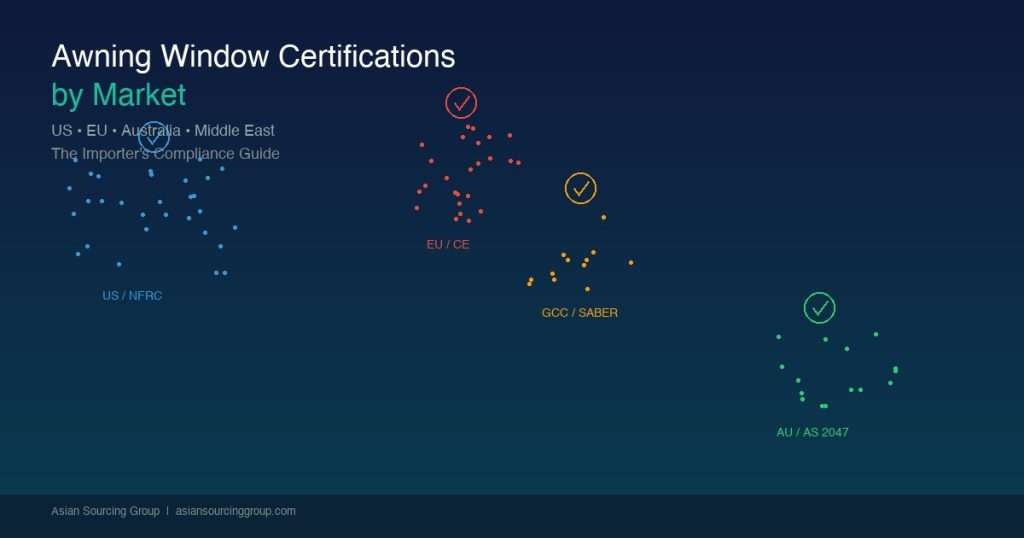
- North America: thermal-break aluminum or uPVC, Low-E IGU, NFRC labeling and ENERGY STAR qualification for utility rebates. ASTM E283/E331 air/water test reports are expected.
- Australia & New Zealand: AS 2047 compliance is mandatory for external windows. Both aluminum and uPVC are common; coastal projects push toward higher-corrosion-class finishes.
- Europe: CE marking under EN 14351-1 and U-value calculation per EN ISO 10077; uPVC is dominant in the north, aluminum with thermal break in the south.
- Middle East & Southeast Asia: non-thermal-break aluminum dominates on cost and durability; prioritize high-UV-resistant powder coat, sand-colored finishes, and dust sealing hardware.
And by budget tier: uPVC wins on lowest landed cost for standard sizes. Thermal-break aluminum wins on flexibility, freight density, and long-term durability; clad wood and fiberglass occupy the premium tier on performance-per-window rather than price.
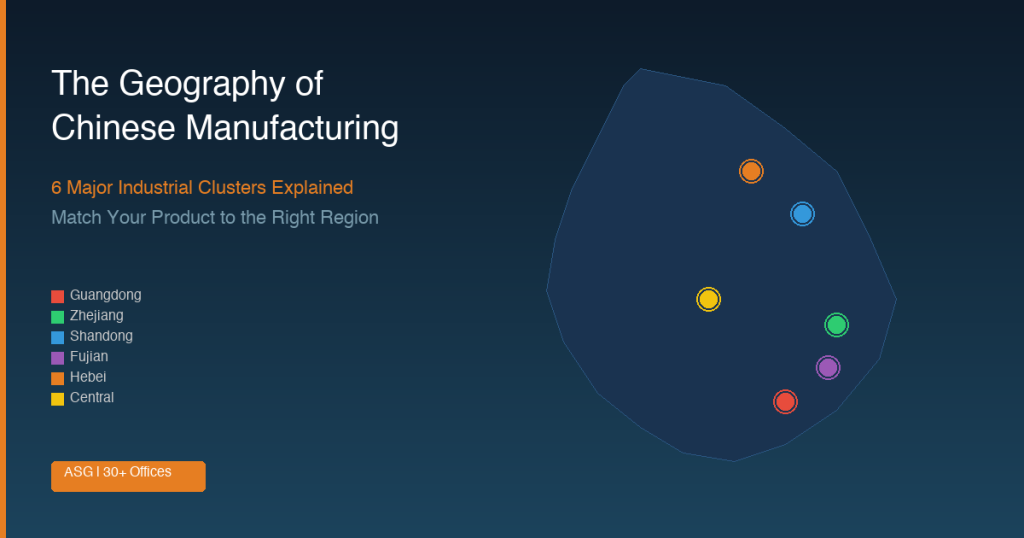
Understanding how different manufacturing regions affect material availability and pricing is essential, aluminum extrusion clusters are concentrated in Guangdong, while uPVC profile production has significant capacity in Shandong and Zhejiang.
Sourcing Checklist: Verify Before You Wire the Deposit

Whatever material you choose, the following checkpoints protect a bulk order:
- Samples first, always. Approve a fully finished sample sash, with the exact glass, finish, and hardware of the production order, not a profile offcut.
- Test reports against your market’s standard. Ask for air permeability, water tightness, and wind load test reports matching the code of the destination country, issued by a named third-party lab, on the actual system.
- Hardware by brand, not by promise. Friction stays, multi-point locks, and handles from known brands (or at least named suppliers) fail far less than anonymous “OEM” hardware. Hardware is the #1 field-failure item on awning windows.
- Corner strength and sealant. For aluminum: crimped or screwed corners with sealant injection. For uPVC: clean welded corners with no gaps. Request photos during production.
- Pre-shipment inspection. An AQL 2.5/4.0 sampling inspection can be conducted at the factory or by a third-party inspector you appoint, including operation testing (open/close 20+ times), glass specification verification, and finish thickness measurement.
- Packaging spec in writing. Paper interleaving, EPS/foam corners, steel or plywood crates for glass, and container loading plan. Most export damage happens between the factory gate and the port of discharge.
- MOQ and lead time realism. Typical MOQs run from one 20GP container or roughly 30-100 m²; lead times of 25-45 days are normal, with glass specification and wood finishes pushing toward the longer end. Our category-specific timeline guide explains how building material orders fit into broader sourcing schedules.
Frequently Asked Questions
What is the best material for awning windows in coastal areas?
Thermal-break or standard aluminum with a marine-appropriate finish (anodized, or powder coating rated C4/C5-M corrosion class), or pultruded fiberglass. Avoid unreinforced uPVC in dark colors facing full sun, and never plain steel. Salt spray is the harshest common environment for window hardware, pay extra attention to stainless or well-plated friction stays.
Aluminum or uPVC: which is actually cheaper to import?
Per square meter FOB, uPVC usually wins. But uPVC ships assembled and bulky while aluminum systems often knock down flat, so container utilization can flip the total landed-cost comparison, especially for large orders. For large sashes, aluminum also avoids the reinforcement weight limits of uPVC. Model both on landed cost, not FOB price. Our guide on calculating true sourcing costs covers the full landed-cost methodology.
What MOQ and lead time should I expect from Asian manufacturers?
Common MOQs are one 20GP container or roughly 30-100 m² per order; some trading-company arrangements allow mixed-product containers at lower effective minimums. Standard lead time is 25-45 days after deposit and drawing confirmation, longer for clad wood, special finishes, or imported glass.
What certifications do awning windows need?
By destination: NFRC/ENERGY STAR and AAMA-related testing for the US and Canada (CSA A440 for Canada), CE marking under EN 14351-1 for Europe, AS 2047 for Australia, and local equivalents elsewhere. Ask the factory which of these they hold on the exact profile system you are buying, certificates are per-system, not per-factory.
Can imported awning windows meet cold-climate energy codes?
Yes. Thermal-break aluminum or uPVC frames with triple or Low-E double glazing and argon fill routinely achieve whole-window U-values from roughly 1.0 to 1.6 W/m²K, which satisfies most North American and Northern European requirements. The key is getting the U-value calculation done for your exact configuration before you commit.
How do I verify quality before shipment?
Approve a finished sample, require third-party test reports on the system, and run a pre-shipment inspection covering operation, dimensions, glass specification, corner quality, and finish thickness. On awning windows specifically, cycle the friction stays repeatedly and check that the sash holds position anywhere in its opening arc, sagging stays are the most common defect found at inspection. Asian Sourcing Group’s quality control team conducts these inspections on-site before every shipment.
Are fabric or canvas materials relevant to awning windows?
No; this is a common mix-up. Fabric, canvas, and acrylic belong to awnings (canopies over doors and windows). Awning windows are glazed top-hung windows, and their material choice is about frames (aluminum, uPVC, wood, fiberglass) and glass. If you are sourcing both awnings and awning windows, treat them as separate product categories with separate supplier evaluations.
Get the Material Decision Right Before You Order
Choosing the frame material for an awning window order is a one-time decision with years of consequences, in energy compliance, warranty exposure, and end-customer satisfaction. The cheapest window that fails your destination market’s code is the most expensive window you will ever buy.
Asian Sourcing Group helps importers, builders, and developers specify, source, and inspect awning windows and other building products across Asia, from factory audit and sample approval through production follow-up and pre-shipment inspection. Tell us your destination market and project specifications, and we will come back with suitable manufacturers, indicative pricing, and a compliance checklist for your market.