
Relying on a single factory in China increases risk, cost exposure, and supply disruption. A multi-factory supply chain reduces these risks by spreading production across specialized suppliers while improving pricing power and flexibility.
This article explains how to build a structured multi-factory system in China. You will learn how to split production across suppliers, manage complex BOMs, reduce cost through cluster sourcing, and control quality across multiple factories using simple operational frameworks.
Why Diversify Suppliers

Supplier diversification strengthens procurement performance by reducing cost, improving flexibility, and lowering supply chain risk. Companies that work with multiple suppliers reduce procurement costs by up to 0.7 percentage points and cut total operating spend by around 20%. Aynı zamanda, they can achieve up to 133% higher procurement ROI because they create price competition, avoid dependency, and allocate sourcing more efficiently across different factories.
Economic Efficiency and Cost Control
A multi-supplier strategy improves pricing discipline across the entire supply chain. When you spread orders across several factories instead of relying on one, each supplier competes for volume. This competition pushes down unit prices, improves negotiation leverage, and shortens lead times.
It also improves internal procurement efficiency. Instead of forcing one supplier to cover all product variations or components, companies can assign production to factories based on their strengths. This reduces waste, improves specialization, and helps teams control cost at a more granular level. Mesai, this structure consistently lowers total procurement spend while improving sourcing flexibility.
Risk Reduction and Supply Stability
Supplier diversification also protects operations from disruption. A single-source model creates a critical failure point—if that factory delays production, increases prices, or shuts down, the entire supply chain stops. This risk becomes more serious in a volatile environment shaped by tariff changes, logistics delays, and geopolitical pressure.
A multi-factory model removes this dependency. If one supplier fails or underperforms, production shifts to alternative factories without stopping output. This keeps supply stable and reduces downtime risk.
It also improves quality consistency in the long term. Data from diversified procurement networks shows that most suppliers meet expected standards, while a significant share even exceeds them. This gives buyers more control over performance, daha az değil. Sonuç olarak, many large procurement organizations have already shifted toward multi-supplier systems to maintain resilience and avoid single-point failures.
Cluster Sourcing Strategy

Cluster sourcing organizes multiple factories into coordinated groups to increase purchasing power, reduce cost, and improve supply chain flexibility. Instead of treating each supplier independently, companies group factories by region, kategori, or capability. This allows them to consolidate demand, standardize procurement logic, and improve total cost visibility across the entire supply network.
Planning Clusters and Volume Aggregation
Planning clusters combine demand from different business units or product lines into a single sourcing strategy. When companies aggregate volume across multiple factories, they gain stronger negotiation power and can secure better pricing, longer contracts, and more stable supply conditions.
This structure also separates cost components more clearly. Buyers can isolate freight, ambalajlama, and handling from the base product price, which improves cost transparency and strengthens total landed cost control. Birçok durumda, this approach reduces overall procurement costs by up to 15%.
Cluster sourcing also helps companies manage price volatility. Buyers can apply raw material index pricing or cost pass-through models within each cluster, which reduces exposure to sudden market fluctuations and stabilizes long-term supplier agreements.
Data Harmonization and Supplier Segmentation
Effective cluster sourcing depends on clean and structured procurement data. Companies usually start by collecting 12–24 months of ERP and invoice records, then standardize them into a unified classification system across categories, malzemeler, and commodities.
Once the data is structured, procurement teams segment suppliers based on their role and strategic importance. Some suppliers serve as high-leverage cost drivers, while others act as stable long-term partners focused on quality and continuity. This segmentation helps teams assign sourcing responsibility more precisely instead of treating all suppliers equally.
To manage performance, companies track supplier scorecards that measure lead time, fill rate, innovation speed, and sustainability metrics such as Scope 3 emisyonlar. They then apply Total Cost of Ownership (TCO) analysis to include risk, logistics complexity, ve değiştirme maliyetleri. This allows teams to decide when to optimize, replace, or transition suppliers across different clusters.
Supplier Segmentation & Role Assignment

Supplier segmentation organizes a multi-factory network into clear categories based on risk and business impact. Using frameworks like the Kraljic Matrix, companies classify suppliers into Strategic, Leverage, Bottleneck, and Non-critical groups. This structure helps procurement teams decide where to focus attention, where to negotiate aggressively, and where to automate purchasing.
Instead of treating all suppliers equally, segmentation separates critical partners from routine vendors. This improves cost control, reduces supply risk, and ensures key components receive the right level of management effort.
Segmentation Matrix Overview
| Supplier Category | Risk & Impact Profile | Operational Focus |
|---|---|---|
| Stratejik | High risk / High impact | Long-term partnership and joint development |
| Leverage | Düşük risk / High impact | Price competition and volume consolidation |
| Bottleneck | High risk / Low impact | Risk control and dual sourcing |
| Non-Critical | Düşük risk / Low impact | Automation and simplified procurement |
Kraljic Matrix for Supplier Prioritization
The Kraljic Matrix helps companies map suppliers based on two factors: supply risk and business impact. This removes guesswork and forces procurement teams to match supplier strategy with real business importance.
Strategic suppliers require close collaboration because they directly affect product performance and continuity. Leverage suppliers allow aggressive price negotiation because alternatives exist. Bottleneck suppliers create risk even at low spend levels, so companies must secure backups or alternative sources. Non-critical suppliers support standard operations and benefit most from automation and simplified purchasing workflows.
This structure ensures procurement teams focus energy where it matters most instead of spreading attention evenly across all suppliers.
Turning Segmentation into Execution
Companies turn segmentation into action by using ERP and procurement data to evaluate supplier performance. They analyze spend, lead time stability, kalite tutarlılığı, ve yanıt verme yeteneği. This data replaces subjective judgment with measurable criteria.
After classification, procurement teams assign clear roles to each supplier group. Strategic suppliers support co-development and long-term planning. Leverage suppliers compete on price. Bottleneck suppliers receive risk controls like dual sourcing. Non-critical suppliers move into automated ordering systems.
Regular reviews keep segmentation accurate. As market conditions change, companies update supplier roles to reflect new risks, maliyetler, or performance shifts. This ensures the multi-factory network stays flexible and aligned with business priorities.
Your End-to-End Product Sourcing Partner in China

Koordinasyon & Lead Time Management

Multi-factory coordination in China depends on industrial clusters and real-time production tracking. Buyers often source from concentrated hubs like Yiwu, which contains 78 industrial parks and thousands of SMEs. This structure helps factories specialize, share supply networks, and reduce coordination delays across different product parts.
Cluster-Based Production Coordination
Industrial clusters improve production speed because suppliers operate close to each other. Instead of managing scattered factories, buyers can group related suppliers within one region. This reduces transport delays between component manufacturers and helps align production schedules more easily.
Fakat, clusters do not guarantee consistent execution. Buyers still need to actively manage timelines because each factory controls its own production flow. Coordination works best when one supplier or sourcing partner centralizes scheduling across all involved factories.
Contract Flexibility and On-Site Control
In many Chinese manufacturing relationships, contracts serve as guiding documents rather than strict enforcement tools. Suppliers often treat delivery timelines as flexible depending on material availability, labor conditions, or order volume changes.
Because of this, lead time control depends on direct oversight. Düzenli fabrika ziyaretleri, production checks, and milestone confirmation help ensure suppliers follow agreed schedules. Without on-site validation, delays can build up without early warning.
Multi-Component Production Tracking
Complex products often involve 20–30+ components sourced from different factories. Each supplier controls a small part of the final assembly, so timing mismatches can easily disrupt the entire production chain.
To manage this, buyers track each component separately and align delivery windows before final assembly begins. A single delay in one component can stop the full production line, so synchronization matters more than individual supplier speed.
Digital Systems for Lead Time Control
ERP systems and tracking dashboards help unify fragmented production data across multiple factories. These tools show order status, inventory levels, and production progress in one system.
This visibility allows buyers to identify delays early and adjust sourcing plans before issues escalate. Instead of reacting after delays occur, teams can reallocate orders or adjust timelines based on real-time factory updates.
Operational Reality in China Supply Chains
Lead time management in China depends less on formal contracts and more on continuous coordination. Buyers who combine cluster sourcing, real-time tracking, and active supplier communication achieve more stable production outcomes across multi-factory setups.
Risk Mitigation Through Redundancy

Redundancy reduces supply chain risk by spreading production across multiple factories and regions. Instead of relying on a single supplier, companies build backup capacity that can take over when disruptions occur. This approach improves stability and keeps production running during delays, shortages, or local shutdowns.
Redundancy Strategy Overview
| Strateji | Technical Application | Operational Benefit |
|---|---|---|
| Dual Sourcing | 70/30 supplier split | Maintains backup capacity for fast production recovery |
| Assembly Backup | Alternative tooling or production methods | Keeps production running during process failures |
| Risk Prioritization | FMEA framework | Identifies and ranks critical supply chain risks |
| Mevzuata Uygunluk | Alternative sites and stock buffers | Ensures continuity during disruptions or audits |
Dual Sourcing and Geographic Diversification
A 70/30 split helps companies balance efficiency and safety. The main supplier handles most production, while a secondary supplier stays active at a lower volume. This setup builds familiarity with both vendors, so companies can shift orders quickly when disruptions occur.
Geographic diversification strengthens this model further. When companies spread factories across different regions, they reduce exposure to local risks such as weather events, transport delays, or policy changes. This structure keeps production stable even when one location faces disruption.
Risk Prioritization with FMEA
The Failure Mode and Effects Analysis (FMEA) framework helps companies rank risks based on their severity and likelihood. Procurement teams use this method to identify weak points in the supply chain and focus resources where failure would cause the most damage.
This structured approach prevents companies from over-investing in low-impact risks while ignoring critical vulnerabilities that can stop production.
Operational Buffers and Continuity Planning
Companies also strengthen redundancy by maintaining safety stock, cross-trained teams, and backup suppliers for key components. These buffers give procurement teams time to react when delays occur.
Birlikte, these redundancy strategies create a more stable multi-factory network. Instead of reacting to disruptions, companies prepare alternative pathways that keep production moving under pressure.
Data Systems to Manage Complexity

Multi-factory supply chains generate high operational complexity because each factory runs different schedules, standartlar, and outputs. Data systems help control this complexity by standardizing information, tracking deviations, and ensuring every factory follows the same operational logic.
Instead of managing factories individually, companies use structured data models to measure performance, detect instability, and maintain alignment across the entire network.
Entropy-Based Metrics and Operational Control
Modern supply chains use entropy-based metrics to measure system instability. These models assign weighted values (Wij) to operational deviations and highlight where production drifts away from expected performance.
Higher deviation scores indicate higher risk areas. Procurement and operations teams then focus attention on these weak points before they escalate into larger disruptions.
This approach works best when companies separate external complexity (market volatility, logistics delays) from internal complexity (factory performance, process variation). While external factors remain uncontrollable, internal system behavior can be improved through tighter data governance and process control.
Standardization Across Manufacturing Sites
Standardization reduces fragmentation across factories by enforcing shared technical rules. International frameworks like ISA-95 help define how data moves from factory equipment to enterprise systems, ensuring consistent reporting across all production sites.
Industry standards such as IEC and ISO frameworks also support system compatibility, especially in regulated or high-precision manufacturing environments. When factories follow the same structural rules, companies reduce integration errors and improve coordination across multiple suppliers.
Unified Data Management Systems
Industrial Data Management Systems (IDMS) connect factory-level data with enterprise planning systems. These platforms collect real-time production data, standardize it, and convert it into usable performance metrics.
This structure allows companies to monitor every factory under one unified system. Instead of relying on fragmented reports from different suppliers, procurement teams access consistent data across all production nodes.
Sonuç olarak, companies improve visibility, reduce miscommunication, and maintain tighter control over multi-factory operations without increasing manual oversight.
When to Scale Supply Chain
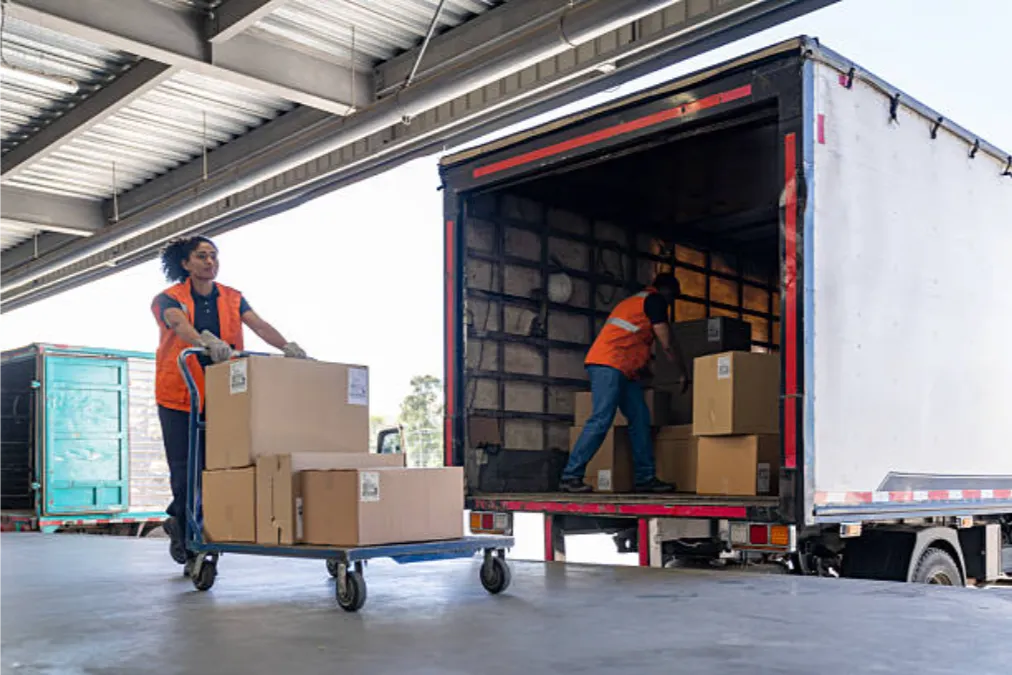
Companies should scale from a single-factory setup to a multi-factory network when performance signals show that one supplier can no longer support stable growth. Key indicators include declining fill rates, inconsistent delivery performance, and rising lead time variability. These signals show that production capacity and coordination limits are starting to affect service quality and cost efficiency.
Operational Triggers for Expansion
Fill rate performance acts as the first scaling signal. When a supplier consistently drops below the 85–95% industry benchmark, it shows that production capacity cannot fully absorb demand fluctuations. Bu noktada, adding additional factories helps stabilize output and reduce stockouts.
Zamanında-Tam Zamanında (OTIF) performance provides another critical signal. When delivery delays become frequent, it indicates that single-supplier dependency creates bottlenecks in production or logistics. Companies usually respond by introducing secondary suppliers to protect delivery consistency.
Lead time instability also drives scaling decisions. When variability increases to the point where companies must raise safety stock beyond 3–5% per additional day of delay, the supply chain becomes inefficient. This cost pressure often justifies moving to a multi-factory structure.
Quality and Financial Readiness Benchmarks
Order accuracy plays a direct role in scaling decisions. High-performing supply chains maintain at least 98.5% accuracy. When accuracy drops below this level, correction costs increase quickly and erode margins.
Audit performance also matters. Companies typically require suppliers to maintain at least a 90% audit pass rate before introducing additional factories. Weak compliance signals increase operational risk when scaling complexity increases.
Infrastructure and System Readiness
Scaling also depends on system capability. A multi-factory supply chain requires strong data integration across suppliers. Companies usually expect at least 80% of suppliers to support EDI or API-based data exchange to maintain real-time visibility.
Without this infrastructure, multi-factory coordination becomes slow and error-prone. When these technical and operational conditions align, companies can expand their supplier base without losing control over cost, kalite, veya teslimat performansı.
Son Düşünceler
Building a multi-factory supply chain in China shifts procurement from reactive buying to proactive risk control. Although this model increases coordination complexity, it delivers strong financial returns, including up to 133% higher procurement ROI and around 20% lower operational spend. When brands apply structured tools like cluster sourcing and a 70/30 supplier split, they reduce dependency on single factories and improve resilience against tariff changes and supply disruptions.
Long-term success depends on system-level control, not just supplier selection. Companies need data-driven oversight, clear supplier segmentation, and consistent performance tracking to keep multi-site operations stable and efficient.
For many growing brands, working with experienced sourcing partners like Asian Sourcing Group (ASG) also helps speed up this transition by supporting supplier verification, coordination, and execution across multiple factories without losing operational control.
Sıkça Sorulan Sorular
Why should brands use multiple factories for the same product in China?
Using multiple factories helps mitigate operational risks, such as production disruptions or capacity limits. Industry practice suggests this diversification is essential for maintaining supply continuity during high-demand periods or when a single-supplier’s output falls short of market needs.
What is the optimal number of suppliers to manage for one item?
The optimal supplier range is 2-5 öğe başına. This provides enough redundancy to mitigate risk without introducing the excessive management costs, logistical complexity, and quality inconsistencies that typically occur when managing more than 5-10 tedarikçiler.
How should production volume be split between primary and backup suppliers?
Standard strategy involves awarding 60-80% of production to the top performer and 20-40% to backup factories. These allocations should be determined by objective scorecards that evaluate key performance indicators like quality consistency, zamanında teslimat, ve kusur oranları.
Does diversifying a supply chain increase manufacturing costs?
Evet, diversification increases costs due to the added complexity of managing multiple relationships and potential loss of volume-based discounts. Fakat, it significantly reduces overall risk exposure, preventing the catastrophic financial impact of a total supply chain failure.



-300x198.png)


