
Recent industry data shows that China accounts for an estimated 39% share of the global kitchen cabinet market, with leading exporters like OPPEIN posting annual revenues above RMB 20 billion and maintaining strong international presence. The industry has recorded annual growth rates reaching 15–20%, highlighting China’s important role as a key supplier for kitchen projects worldwide.
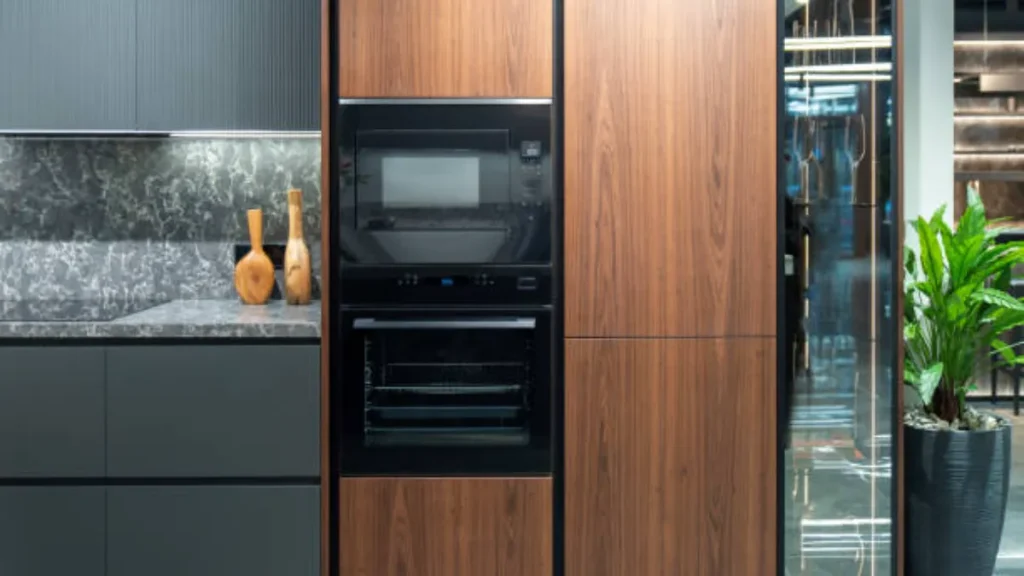
Unique Advantages of China’s Kitchen Cabinet Manufacturers
The dominance of Chinese manufacturers, such as OPPEIN, ZBOM, and Golden Home, is not an accident of geography but the result of specific industrial policies and the agglomeration of production factors. The core competitive strengths of this sector can be analyzed through three primary dimensions: industrial scale, technological adoption, and the “Smart Manufacturing” paradigm.
Industrial Clusters
China’s kitchen cabinet industry benefits from highly developed clusters in the Pearl River Delta and Yangtze River Delta. Factories sit close to hardware, board, quartz, adhesive, and packaging suppliers, creating a dense ecosystem that cuts logistics costs, reduces inventory pressure, and supports true Just-in-Time (JIT) production. This level of supply chain efficiency is difficult for countries like Vietnam or Mexico to match.
Automation
China’s leading manufacturers are no longer labor-driven—they are automation-driven. Advanced German and Italian machinery (such as Homag and Biesse) is integrated with proprietary Chinese software to deliver precise cutting, edge banding, and drilling. Automated production ensures consistent quality from the first cabinet to the thousandth while keeping material waste extremely low.
C2M Model
One of China’s strongest advantages is the C2M (Consumer-to-Manufacturer) system. Retailer design software feeds 3D plans directly into factory machines, shortening lead times for custom orders. This digital integration enables fully customized kitchen cabinets at costs and speeds close to mass production—an advantage that manufacturers in less digitized markets cannot easily replicate.
Comparison With Global Competitors
When evaluating sourcing options, global buyers typically weigh China against three primary alternatives: European manufacturers (Germany/Italy), Southeast Asian manufacturers (Vietnam/Malaysia), and domestic production (local to the buyer). A comparative analysis reveals distinct structural differences in strategy and capability.
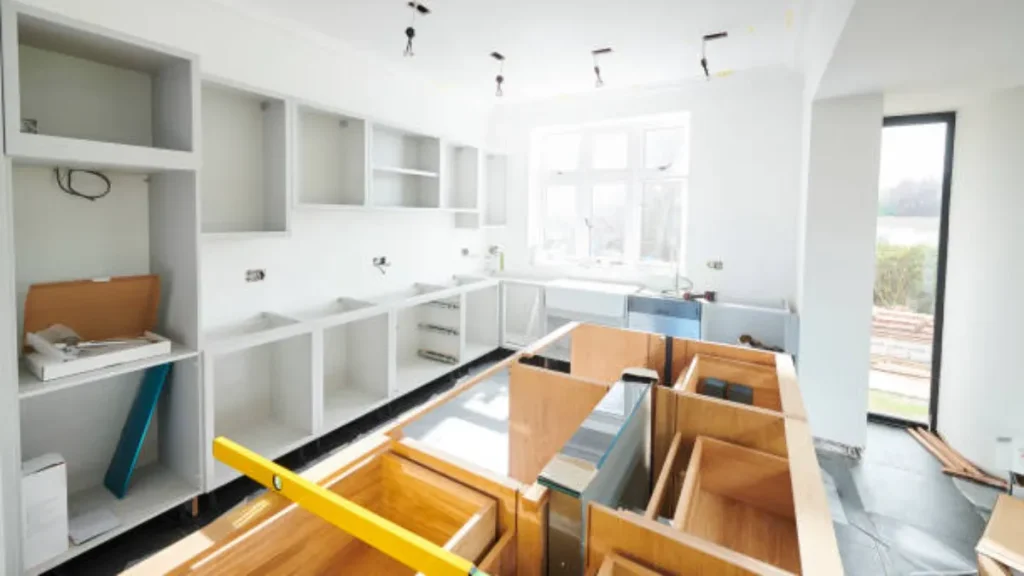
China vs. Europe (Germany/Italy)
European manufacturers define the global frontier for design trends and brand prestige. Their comparative advantage lies in heritage and high-end aesthetic innovation. However, their supply chains are often rigid, and their cost structures are heavily burdened by energy prices and labor regulations. China has successfully adopted a strategy of “fast following” and adaptation. While Europe innovates the trend, Chinese manufacturers industrialize it. For the vast majority of the mid-to-high-end market, Chinese factories offer a product that is functionally indistinguishable from European equivalents but at a price point and volume capacity that European firms cannot match.
China vs. Southeast Asia (Vietnam/Malaysia)
Vietnam has emerged as a primary alternative, particularly driven by tariff avoidance strategies (such as Section 301 tariffs in the US). However, a deep dive into the supply chain reveals that Vietnam’s cabinet industry remains heavily dependent on intermediate goods imported from China—including plywood, hardware, and finishes. This creates a “supply chain lag.” China retains the advantage of vertical integration. A Chinese manufacturer controls the raw material input; a Vietnamese manufacturer is often an assembler of Chinese inputs. Consequently, Chinese factories offer superior stability in lead times and material consistency, as they are less susceptible to cross-border logistical disruptions for raw materials.
China vs. Domestic Manufacturing (US/EU)
Domestic manufacturers offer the fastest shipping times and easiest recourse for warranty claims. Their disadvantage is the inability to scale rapidly. A large-scale multi-family residential project requiring 3,000 kitchen units in tight sequence can overwhelm local custom shops. Chinese “Champions” like OPPEIN operate with capacities measured in millions of sets annually. For large-scale developers, this capacity guarantee acts as a hedge against construction delays, a value proposition that often outweighs the logistical complexity of importation.
Quality and Craftsmanship
The narrative regarding quality in Chinese manufacturing has shifted from “adequate” to “compliant with global stringency.” This shift is driven by the necessity to export to regulated markets like North America and the European Union. Quality assurance in this sector is now systemic rather than artisanal.
Material Standards and Safety
The primary concern for global importers is chemical safety, specifically formaldehyde emissions in engineered wood products. Leading Chinese manufacturers have standardized around strict compliance frameworks, including CARB Phase 2 (California Air Resources Board) and EPA TSCA Title VI certification for the US market, as well as E1 and E0 standards for Europe. The supply chain control mentioned earlier allows factories to certify the chain of custody for timber, ensuring compliance with the Lacey Act and preventing the use of illegal logging sources.
Manufacturing Techniques and Durability
Craftsmanship in the industrial age is defined by tolerance levels and finishing technology.
| Category | What It Means | Key Benefits |
| Edge Banding | Use of PUR glue and laser edge-banding technology | Seamless, water-resistant edges; longer lifespan for particle board/MDF in humid environments |
| Finishing Systems | Automated UV-curing lacquer lines in dust-free facilities | Smooth, flawless high-gloss or matte finishes; resistant to scratches and yellowing |
| Hardware Integration | Premium hardware from brands like Blum, Hettich, Salice (plus improved local options like DTC) | Reliable drawer slides and hinges; Western-standard durability and user experience |
Verification Mechanisms
The industry supports a robust third-party inspection ecosystem. Standard operating procedures now include pre-shipment inspections (PSI) and container loading checks (CLC) that utilize AQL (Acceptable Quality Limit) standards. This institutionalized quality control reduces the asymmetric information problem that historically plagued international sourcing.
Cost Advantages
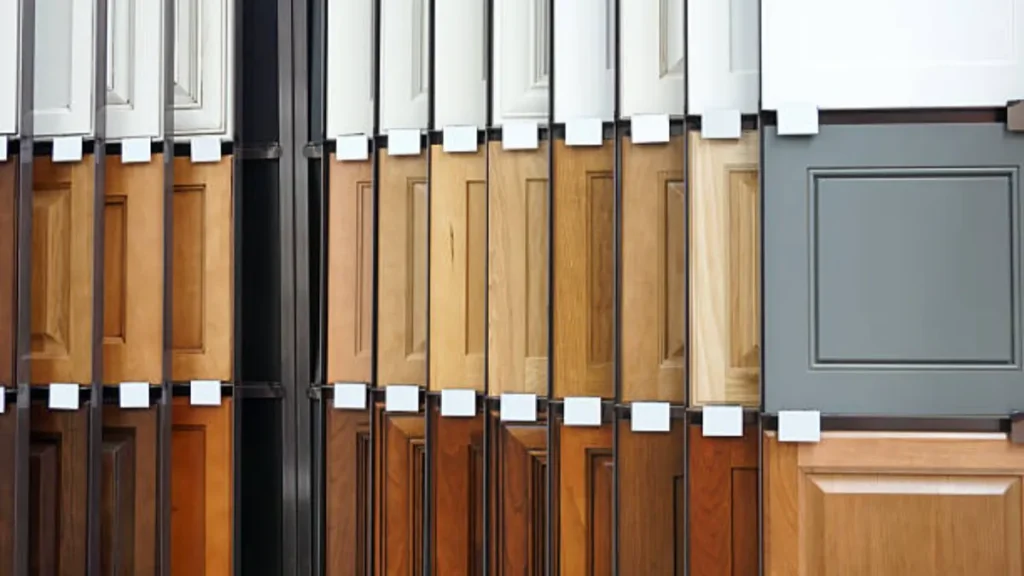
China’s cost advantage is often misunderstood as simply a function of low wages. In reality, as Chinese labor costs have risen, the industry has maintained its competitive pricing through structural cost optimization and supply chain efficiencies.
- Procurement Power: The sheer volume of raw materials consumed by the Chinese furniture sector gives manufacturers immense leverage over upstream suppliers of timber, melamine, and resins. This bulk procurement lowers the marginal cost of production significantly compared to smaller overseas competitors.
- Infrastructure Efficiency: China’s investment in logistics infrastructure—highways, deep-water ports, and automated warehousing—lowers the transaction costs of moving goods. The cost to move a container from a factory in Foshan to the port of Nansha is a fraction of the cost for similar internal logistics in many developing nations.
- Energy and Component costs: While variable, industrial energy costs and the localized production of metal components (handles, screws, slides) remove import duties and shipping costs from the Bill of Materials (BOM).
Innovation Trends
The trajectory of the Chinese kitchen cabinet industry is pointed toward higher value-added production. Innovation is no longer limited to process efficiency but extends to product functionality and sustainability.
Smart Manufacturing and IoT Integration The concept of the “Smart Kitchen” is moving from prototype to mass production. Chinese manufacturers are pioneering the integration of IoT (Internet of Things) functionality directly into cabinetry. This includes:
- Embedded Lighting: LED systems that are pre-routed into the cabinet carcass, requiring no on-site electrical work, often controlled via sensors or smart home apps.
- Automated Hardware: Servo-drive systems for touch-to-open drawers and lift-up doors are becoming standard options in mid-to-high-end lines.
- Sanitization: Integration of UV-C sterilization units within cabinetry for dishware and utensil storage, a trend accelerated by post-pandemic hygiene awareness.
Conclusion
The data suggests that China’s role in the global kitchen cabinet industry is not diminishing but evolving. The combination of industrial scale, deep supply chain integration, and technological adaptability creates a competitive moat that is difficult to replicate. For global businesses, the question is not whether to source from China, but how to access this sophisticated capacity effectively while mitigating risks related to quality compliance and logistics.
Why Work with ASG for Smarter Cabinet Sourcing
Stop relying on internet searches alone—navigate China’s massive cabinet manufacturing landscape with real on-the-ground intelligence. Work with Asian Sourcing Group (ASG) to access verified factories, understand the structural advantages of China’s supply chain, and make sourcing decisions backed by expert local insight. Leverage ASG to secure not just high-quality products, but a long-term competitive edge for your business.
Smarter Sourcing from China with AI and Local Expertise
Partner with Asian Sourcing Group to access thousands of verified factories, backed by AI-driven matching and on-the-ground support in Guangzhou. Save time, cut costs, and reduce risks with a sourcing solution designed to scale your business securely.

Frequently Asked Questions
Which Chinese kitchen cabinet factory has the largest production capacity?
OPPEIN Home Group Inc. holds the title as Asia’s largest kitchen cabinet manufacturer, with massive production facilities and the capability to produce millions of cabinet units annually across their complete home furniture range.
Do Chinese kitchen cabinet manufacturers meet international quality standards?
Leading Chinese kitchen furniture suppliers consistently meet or exceed international quality standards including ISO certifications, CARB compliance for North American markets, and various European safety requirements. Top manufacturers invest heavily in quality control systems to maintain these standards.
Can you get custom cabinets from Chinese manufacturers?
Absolutely. Most major Chinese kitchen cabinet manufacturers specialize in customization, offering choices in materials, cabinet doors, finishes, dimensions, and cabinet hardware. Their advanced manufacturing systems can handle custom orders efficiently while maintaining competitive pricing.
What materials do Chinese cabinet makers typically use?
Chinese kitchen cabinet factories work with a complete range of materials including solid wood, plywood, MDF, particle board, and various engineered materials. Surface options include melamine, lacquer, PVC, wood veneers, and glass cabinet doors, providing extensive aesthetic and durability choices.
For those interested in the craft, resources like how to build kitchen cabinets provide deeper insights into traditional construction methods.
How do Chinese manufacturers integrate smart features into cabinets?
Leading brands incorporate smart cabinet hardware like automated opening systems, motion-activated lighting, intelligent storage solutions, and smart home connectivity. These features create more intuitive and efficient kitchen experiences through advanced cabinet components and IoT integration.
What are typical lead times for ordering from a Chinese kitchen cabinet factory?
Lead times vary significantly based on customization complexity, order volume, and destination. Standard cabinet orders typically require 3-6 weeks, while highly customized projects or large installations can take 2-4 months including production and shipping time.
Are Chinese kitchen cabinets actually more affordable than Western alternatives?
Chinese kitchen cabinet manufacturers typically offer significant cost advantages, especially for large orders or custom projects. They provide excellent value across different price points, from budget-friendly options to premium designs that compete favorably with expensive European alternatives.
How do Chinese manufacturers ensure long-term cabinet durability?
Top manufacturers invest in advanced machinery, rigorous quality control processes, and extensive testing of materials and cabinet hardware from reputable suppliers like Blum and Sugatsune. They test everything from cabinet hinges to drawer slides to ensure components meet long-term durability standards.



-300x198.png)


