
Have you ever walked through your home and really looked at your interior doors? Most people treat them as afterthoughts, but these functional elements quietly shape every aspect of your daily experience. Yet when it comes time to choose new types of interior doors, the sheer number of options can leave you feeling overwhelmed.
This guide cuts through the confusion and gives you insider knowledge about interior door styles, functionality, and design secrets that most homeowners never learn. You’ll discover the different interior door styles and how to make the right door choices. Get ready to see these everyday elements in a completely new light!
What are the Essential Components of a Door?
Key Components: Stiles, Rails, Panels, and Lites
Every door tells a story through its construction, and understanding these fundamental parts helps you appreciate why certain types of interior doors perform better than others.
- Stiles & Rails: Think of these as the door’s skeleton. Stiles run up and down the sides, while rails stretch across horizontally, creating the framework that holds everything together.
- Panels & Lites: These fill in the framework. Panels are the solid sections that give doors their character, while lites are glass inserts that control how much light passes through and how much privacy you get.
- Core Types: The door’s core determines its weight, sound-blocking ability, and price tag. Hollow-core doors use a cardboard honeycomb interior that keeps costs down, while solid-core doors pack in more material for better sound insulation and durability.
Framing and Hardware: Door Swing, Jambs, and Accessories
Getting door handing right the first time saves you headaches and return trips to the hardware store, while understanding the surrounding frame is crucial for proper installation.
- Left-Hand vs. Right-Hand Swing: Stand on the side where you can see the hinges, and notice which side they’re on—that tells you whether you need a left-hand or right-hand door. This industry standard prevents costly ordering mistakes.
- Jambs, Lintels, and Thresholds: These frame elements create the opening where your door lives. Jambs form the sides, the lintel spans the top, and the threshold sits at the bottom, all working together to support proper door operation.
- Door Furniture and Hardware: Quality hinges, handles, locks, and other accessories make the difference between a door that works smoothly for decades and one that starts sagging or sticking within a few years.
Major Types of Interior Doors by Operation
How a door opens and closes affects everything from your furniture layout to traffic flow, making operational style just as important as appearance.
1. Hinged Interior Doors (Single-Leaf, Double-Leaf, Dutch, Louvered)
Hinged doors remain the gold standard because they’re reliable, familiar, and work well in most situations.
- Single-Leaf Doors: The classic choice that works everywhere, offering straightforward operation and endless style possibilities for any room in your home.
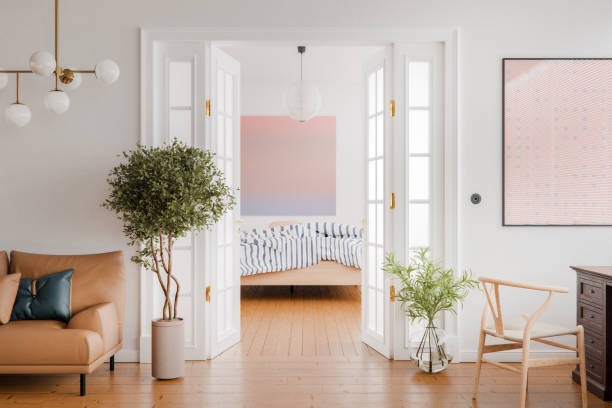
- Double-Leaf (French) Doors: These paired doors create dramatic entrances between rooms while flooding spaces with natural light. They’re perfect for connecting living and dining areas or opening up home offices.
- Dutch Doors: Split horizontally in the middle, these charming doors let you open just the top half for ventilation and conversation while keeping pets or small children contained.
- Louvered Doors: Angled slats provide constant airflow, making these interior door styles ideal for closets, laundry rooms, and anywhere you need ventilation without sacrificing privacy.
2. Space-Saving Sliding Doors (Pocket, Bypass, Barn)
When floor space is precious, or you want to create flexible open areas, sliding doors deliver solutions that hinged doors simply can’t match.
- Pocket Doors: These space-saving champions disappear completely into the wall, giving you back valuable floor space while creating clean, uninterrupted sight lines.
- Bypass Doors: Common in closets, these doors slide past each other on parallel tracks, providing wide access without requiring any swing clearance.
- Sliding Barn Doors: Originally a farmhouse staple, these doors now star in modern homes as both functional elements and bold design statements, though they don’t seal as tightly as traditional hinged doors.
- Sliding Glass Doors (Interior Applications): These transparent barriers maintain visual connections between spaces while defining separate areas, perfect for home offices or studies that need to feel connected to the main living area.
3. Folding Doors (Bi-Fold & Accordion)
Folding doors excel at covering wide openings while taking up minimal space when open, making them perfect for flexible living situations.
- Bi-Fold Doors: These fold in half to provide wide access with minimal swing radius, making them the go-to choice for closets and pantries where you need to see everything at once.
- Accordion Doors: Multiple panels that stack compactly when open, these doors work well for temporarily dividing large rooms or concealing expansive storage areas.
Sourcing from China Made Smarter
Leverage AI-powered supplier matching and local expertise to find verified factories that fit your needs. Save time, cut costs, and reduce risks with Asian Sourcing Group’s end-to-end solutions tailored for importers, retailers, and entrepreneurs worldwide.

Popular Interior Door Styles
Panel Doors
Panel doors offer incredible versatility, working beautifully in both traditional and modern settings depending on their specific design details.
- Recessed Panel (Shaker/Craftsman): Clean lines and understated elegance make these panel doors perfect for modern and minimalist spaces. The panels sit slightly below the frame, creating subtle shadow lines without overwhelming the design.
- Raised Panel (Traditional/Colonial): These doors feature panels that project outward from the frame, creating depth and classical architectural detail that suits traditional and transitional homes beautifully.
- 6-Panel Doors: A timeless favorite that continues its comeback, these doors divide the surface into six distinct sections, offering classic proportions that work in virtually any home style.
- Custom Panel Configurations: From single large panels to intricate multi-panel designs, custom configurations let you create doors that perfectly match your home’s unique personality.
Flush Doors
Flush doors prove that sometimes the simplest solution is also the most sophisticated, offering clean lines that work with virtually any design style.
- Sleek Minimalism: The completely flat surface creates an uninterrupted visual plane that’s perfect for contemporary and industrial designs where every element serves the overall aesthetic.
- Paint-Grade Versatility: Flush doors accept paint beautifully, giving you unlimited color options to coordinate with any decor scheme or create bold accent pieces.
- Integration with Walls: These doors can virtually disappear into surrounding walls, creating hidden entrances and seamless transitions that enhance modern architectural concepts.
Glass Doors
Glass elements in doors transform how light moves through your home and can make spaces feel significantly larger and more connected.
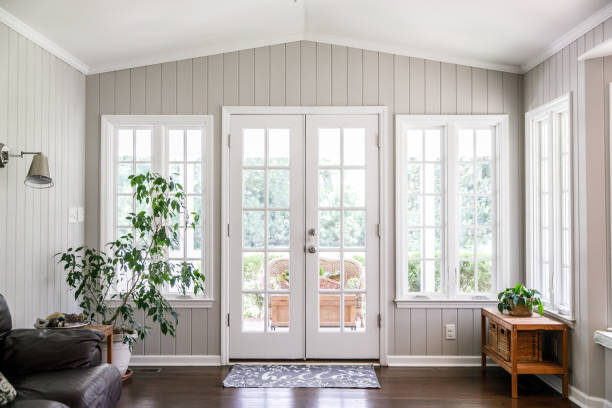
- French Doors (All-Glass Lites): Maximum light transmission and visual continuity make these doors excellent for connecting living spaces while maintaining some separation for sound and climate control.
- Frosted & Textured Glass: These options provide privacy while still allowing light to filter through, perfect for bathrooms, home offices, or anywhere you want diffused illumination without sacrificing discretion.
- Divided Lite Doors: Multiple small glass panes add architectural character and visual interest, echoing traditional window styles while bringing light into interior spaces.
Deep Dive into Door Material
Smart material choices affect everything from your door’s lifespan to its sound-blocking ability, making these practical considerations just as important as style preferences.
Comparing Different Material Types
Different materials bring distinct advantages and challenges, so understanding these properties helps you choose doors that perform well in your specific situation.
- Solid-Core Doors (and Solid Wood): Natural beauty and excellent sound insulation come with higher costs and sensitivity to humidity changes that can cause warping over time. They block significantly more noise than hollow-core alternatives, making them worth the extra investment for bedrooms and bathrooms where privacy matters.
- Hollow-Core Doors: These cost less, weigh less, and install more easily, working well for closets and less-used areas where sound blocking is not a priority.
- Engineered Wood (MDF/HDF) Doors: Stable, cost-effective, and perfect for painted finishes, these engineered materials resist warping while offering smooth surfaces that take paint beautifully.
- Composite Doors (Fiberglass, Steel – Interior Use): Though more common for exteriors, composite materials are gaining popularity indoors thanks to their strength, insulation properties, and minimal maintenance requirements.
| Material | Cost | Durability | Sound Insulation | Paint/Stain Ability | Moisture Resistance |
|---|---|---|---|---|---|
| Solid Wood | High | High | Excellent | Excellent | Moderate |
| Engineered Wood (MDF/HDF) | Mid | Good | Good | Excellent (Paint) | Good |
| Hollow-Core | Low | Fair | Fair | Good (Paint) | Poor |
| Composite (Fiberglass) | Mid-High | Excellent | Good | Excellent | Excellent |
Finishes: Painted, Stained, Laminate, and Veneer
The finish you choose dramatically impacts both appearance and performance, influencing how well your doors integrate with your overall design scheme.
- Painted Doors: Unlimited color possibilities let you coordinate with any decor or create striking accent pieces that become focal points in their own right.
- Stained & Varnished Doors: Natural wood finishes showcase grain patterns and bring warmth to spaces, creating a connection with nature that paint simply can’t replicate.
- Laminates and Veneers: Budget-friendly options that can convincingly mimic expensive wood species or other materials while offering excellent durability and easy maintenance.
Durability and Maintenance Considerations
Beyond good looks, doors contribute significantly to your home’s comfort level and require appropriate care to maintain their appearance and function over time.
- Thermal Performance: Interior doors help maintain climate zones within your home, containing heated or cooled air in specific areas and improving overall energy efficiency.
- Care and Maintenance: Different door types and finishes need specific care routines, from regular dusting to occasional refinishing, to keep them looking and working their best for years to come.
Sourcing from China Made Smarter
Leverage AI-powered supplier matching and local expertise to find verified factories that fit your needs. Save time, cut costs, and reduce risks with Asian Sourcing Group’s end-to-end solutions tailored for importers, retailers, and entrepreneurs worldwide.
How to Choose the Right Door for Every Room
Matching Door Styles to Interior Decor
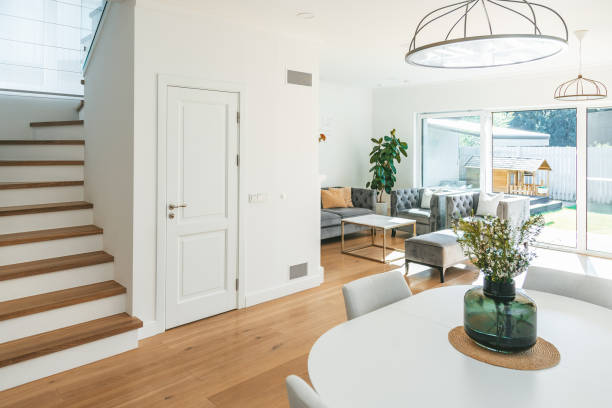
Choosing interior door styles that complement your overall design aesthetic creates visual cohesion that makes your entire home feel more intentional and polished.
- Modern & Contemporary: Sleek flush doors, minimalist panel designs, and subtle glass features create clean lines that support the uncluttered aesthetic these styles demand.
- Farmhouse & Rustic: Sliding barn doors, simple panel designs, and distressed finishes add authentic character that supports the cozy, lived-in feeling these styles celebrate.
- Traditional & Transitional: Raised panel doors, French doors, and classic hardware provide the elegant, timeless appeal that anchors these sophisticated design approaches.
- Bohemian & Eclectic: Repurposed doors, unique finishes, and unconventional hardware let you express creativity and individuality while supporting these free-spirited aesthetic philosophies.
Check the Functionality and Privacy Needs
Matching door choices to each room’s specific needs ensures that form and function work together harmoniously throughout your home.
- Privacy Levels: Bedrooms and bathrooms need solid-core doors or frosted glass options, while home offices might benefit from glass doors that provide a visual connection with the rest of the house.
- Light Flow: Strategic use of glass doors can brighten dark hallways and create visual connections between spaces, making your entire home feel more open and spacious.
- Space Saving: Sliding or folding doors work wonders in tight quarters or multi-functional spaces where every square foot of floor area matters.
- Budgeting for Doors: Understanding cost differences between materials, styles, and custom options helps you allocate your renovation budget wisely and avoid surprise expenses.
Final Thoughts
Interior doors may seem simple, but they quietly set the tone for how your entire space feels and functions. Once you understand the key styles, materials, and performance features, you’ll find it much easier to choose doors that fit your design vision and make everyday life smoother.
If you’re planning to source interior doors from China, having a trusted partner by your side makes all the difference. ASG (Asian Sourcing Group) helps you cut through the noise, match with reliable manufacturers, control quality, and keep your project moving without stress.
👉 Ready to make your sourcing faster and easier?
Contact us today to get expert guidance and start your sourcing journey!
FAQs
How do different interior door styles impact a room’s aesthetic?
Door styles dramatically influence room character. Panel doors add traditional charm, flush doors create modern simplicity, French doors enhance light and openness, while sliding barn doors provide rustic appeal. The right choice reinforces your overall design theme.
Can interior doors be customized?
Absolutely. Customization options include paint colors, stain finishes, panel configurations, glass inserts, and unique door hardware. These choices let you create doors that perfectly match your specific design vision and functional requirements.
Are sliding barn doors suitable for all interior spaces?
Sliding barn doors excel at saving space and making design statements, particularly in farmhouse or modern rustic settings. However, they don’t seal as tightly as hinged doors, making them less suitable for bedrooms or bathrooms where sound privacy is crucial.
What is a pocket door and when should I consider using one?
Pocket doors slide completely into wall cavities when open, eliminating swing clearance requirements. Consider them for small bathrooms, pantries, or any space where traditional door swings would interfere with furniture placement or traffic flow.
How do interior doors contribute to energy efficiency?
Interior doors help create climate zones within your home by containing conditioned air in specific rooms. Solid-core doors provide better insulation than hollow-core alternatives, and proper sealing prevents drafts between spaces.



-300x198.png)


